Kinmilo 28-Piece Wooden Animal Dominoes | Picture Matching, Path Building & Cooperative Play
Kinmilo 28-Piece Wooden Animal Dominoes | Picture Matching, Path Building & Cooperative Play
Kinmilo 28-Piece Wooden Animal Dominoes | Picture Matching, Path Building & Cooperative Play
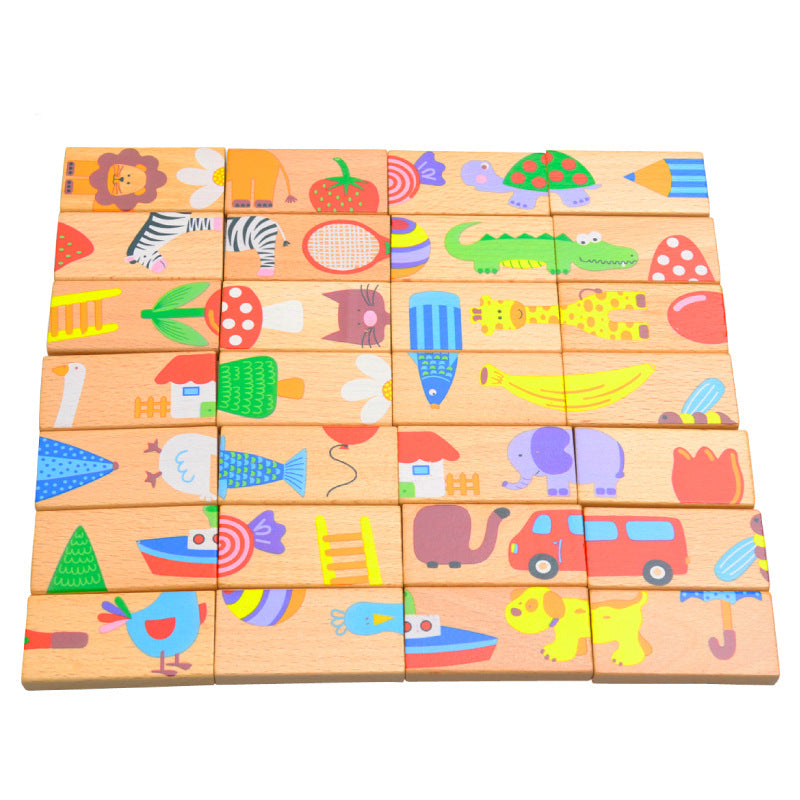
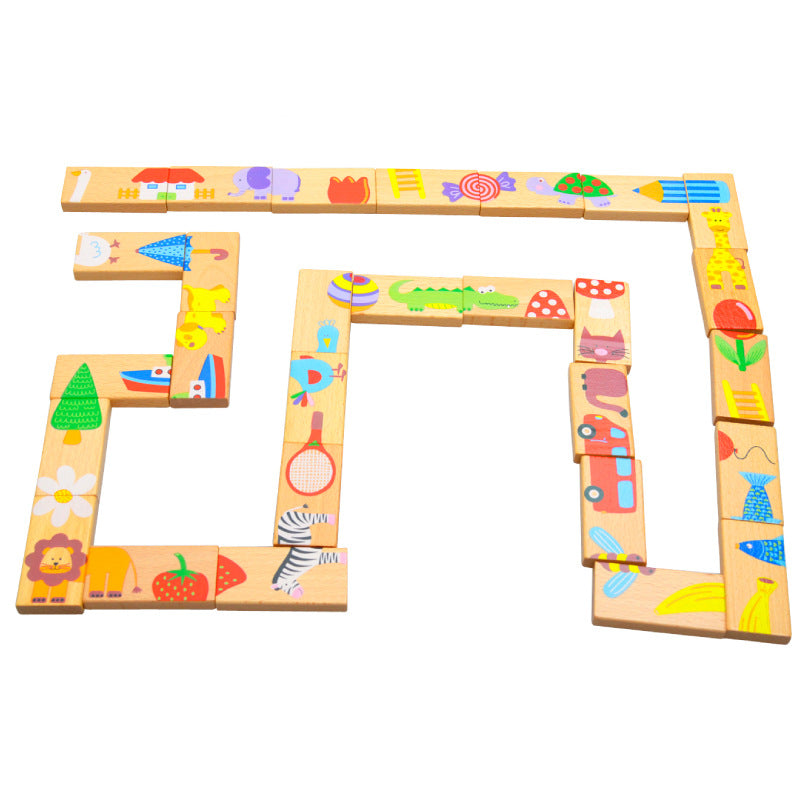
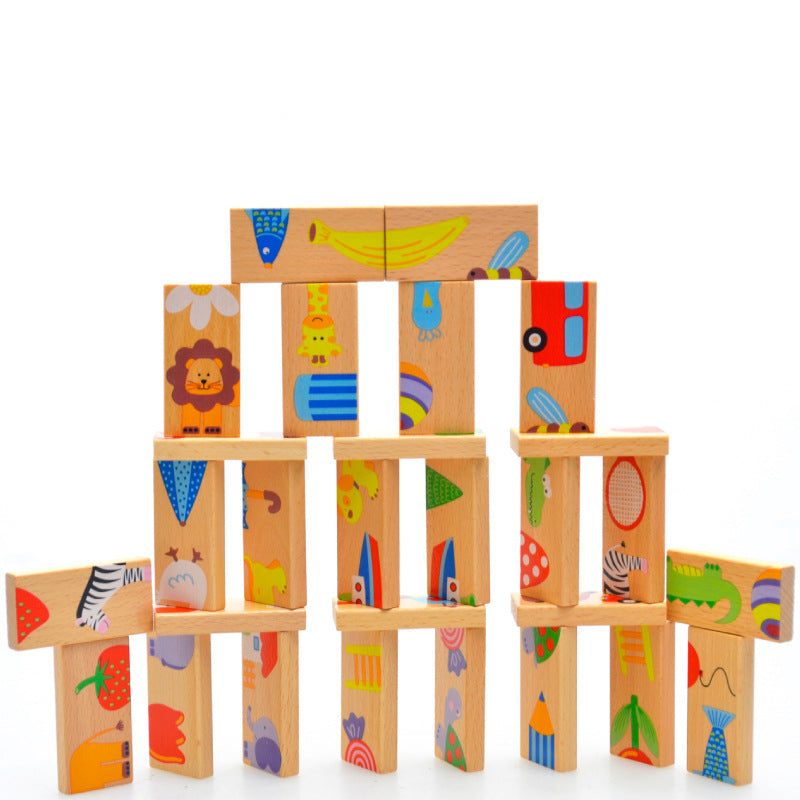
A colourful set of 28 wooden domino-style tiles featuring animals, vehicles, fruit and familiar objects. Match the illustrated halves to make a long pathway, a square or an imaginative standing-tile pattern.
What children can explore
Hands-on visual attention, shape or number recognition, shared problem-solving, fine-motor coordination and opportunities for parent–child communication. Activities are educational play opportunities, not medical treatment.
Kinmilo Together Time: A Parent–Child Play Plan
Play Together. Grow Together.
1. Connect & Demonstrate
Lay out three tiles and demonstrate matching two picture halves. Say, “I found a lion. Can you find the other half?”
2. Share the Play
Take turns choosing the next tile. The parent can model asking, “Your turn?” while the child points or names an image.
3. Grow Together
Build a longer domino path, sort by theme, or stand tiles upright to explore cause and effect with a gentle domino fall.
Adapting Play for Different Learning Needs
For children with ADHD, begin with five or six tiles and one short round. For autistic children, keep a predictable left-to-right match rule and show a finished example. For children with language or developmental differences, work with just two picture pairs and use clear visual cues. Offer extra time, pointing or AAC cards instead of requiring spoken answers.
Product Options & What's Included
Illustrated 28-piece wooden picture domino set.
Montessori & Waldorf Inspired Play: FAQ
Is this Montessori or Waldorf material? It can support Montessori-inspired hands-on exploration and Waldorf-style imaginative play at home; it is not an endorsement by either educational organisation.
Can children with ADHD, autism or developmental disabilities enjoy it? Yes, many families can adapt the activity to individual preferences, strengths and support needs. Caregiver modelling and choice-making are key. No diagnosis-specific outcome is guaranteed.
Can non-speaking children join? Absolutely. Use pointing, gestures, photos, signs or an AAC system to choose and take turns.
Safety and testing: Adult supervision is recommended; inspect all pieces before use, particularly for children who mouth objects. Keep small pieces and cords away from unsupervised young children. Kinmilo states that product-specific CPC and CE testing documentation is available; request the applicable certificate and age recommendation before purchase if required.
Couldn't load pickup availability