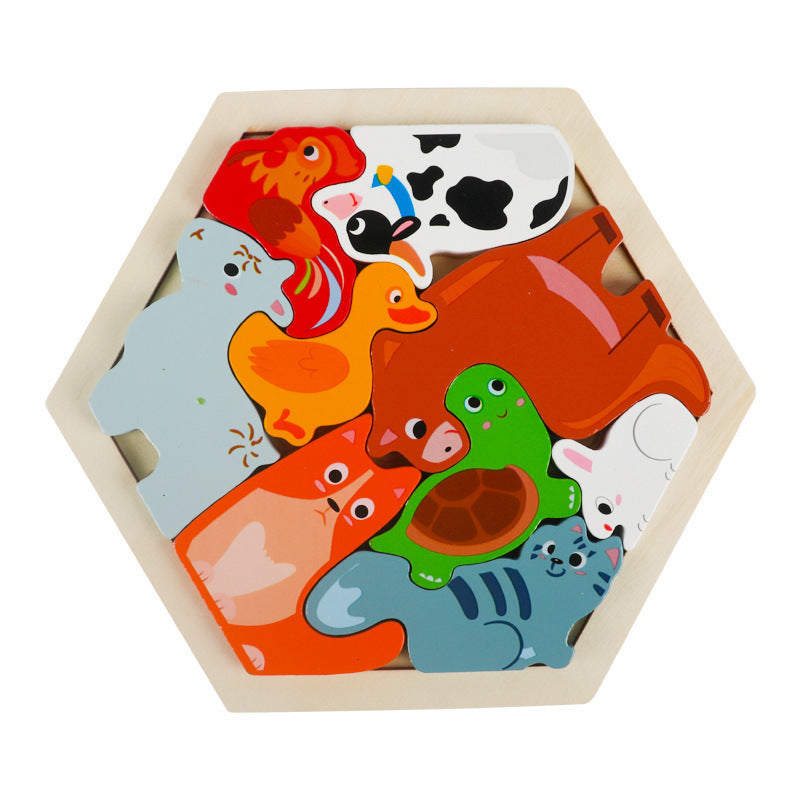
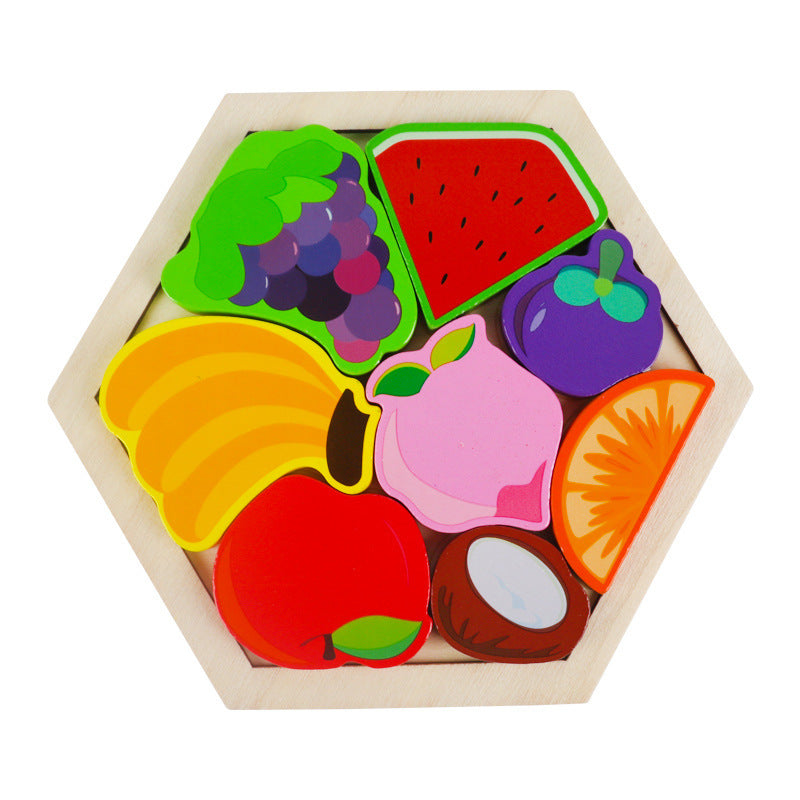
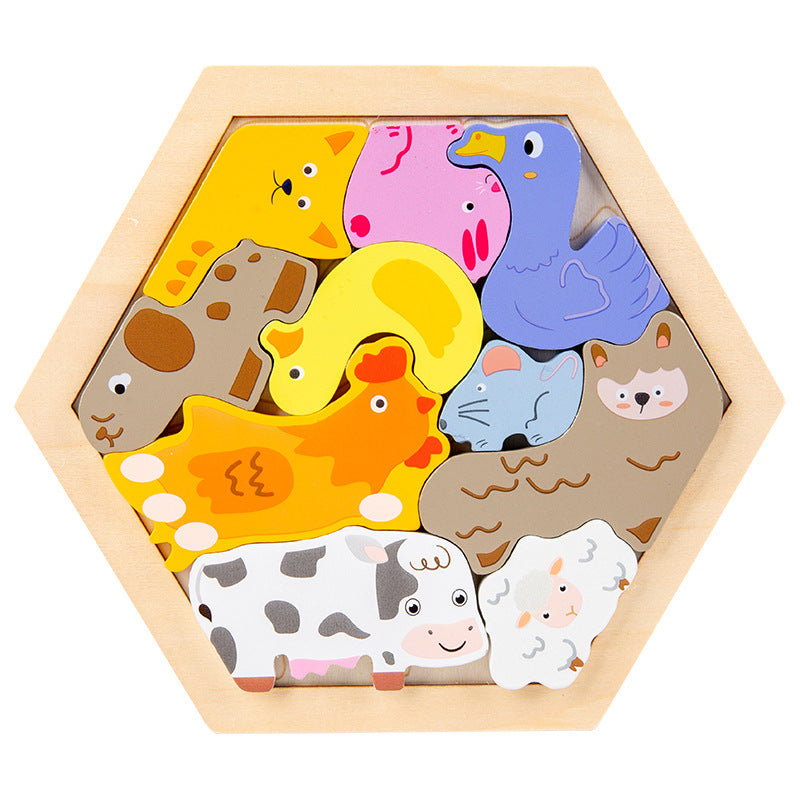
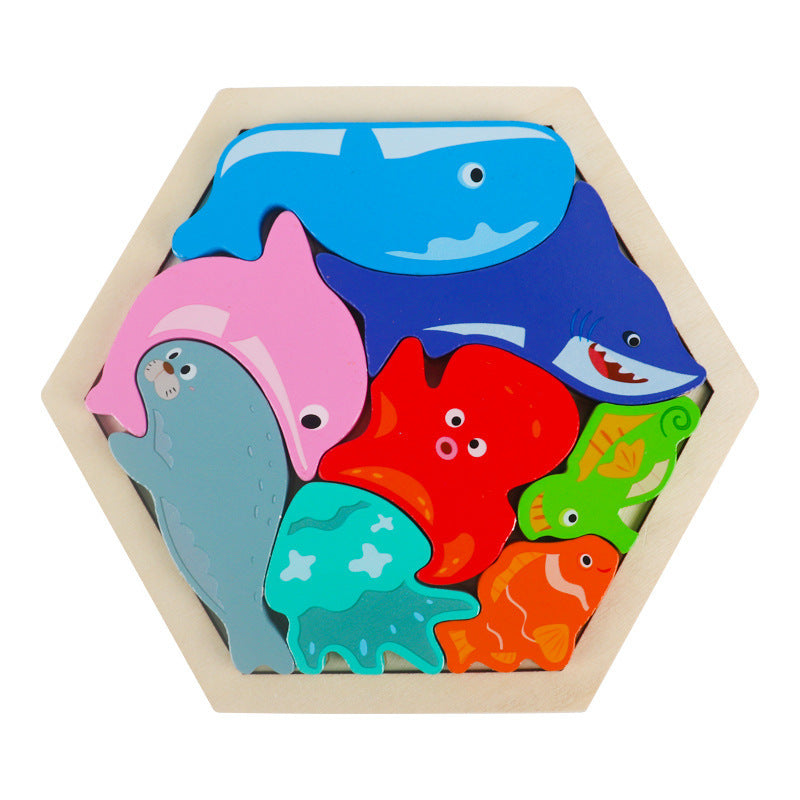
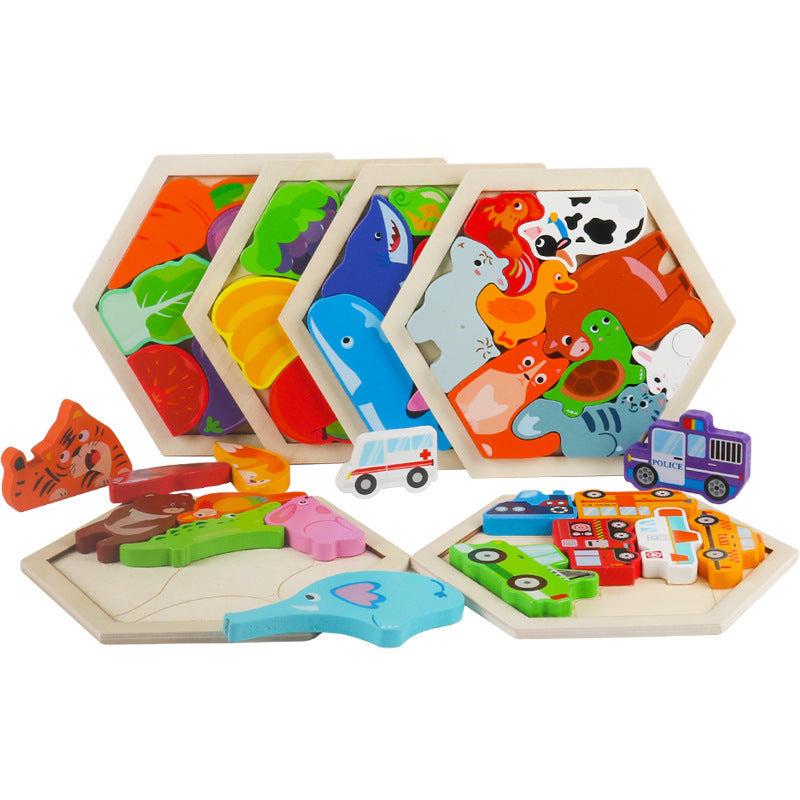
Kinmilo Hexagonal Wooden Animal & Picture Puzzle | 8 Designs
Kinmilo Hexagonal Wooden Animal & Picture Puzzle | 8 Designs
Hexagonal Wooden Puzzle: One Shape, Many Stories
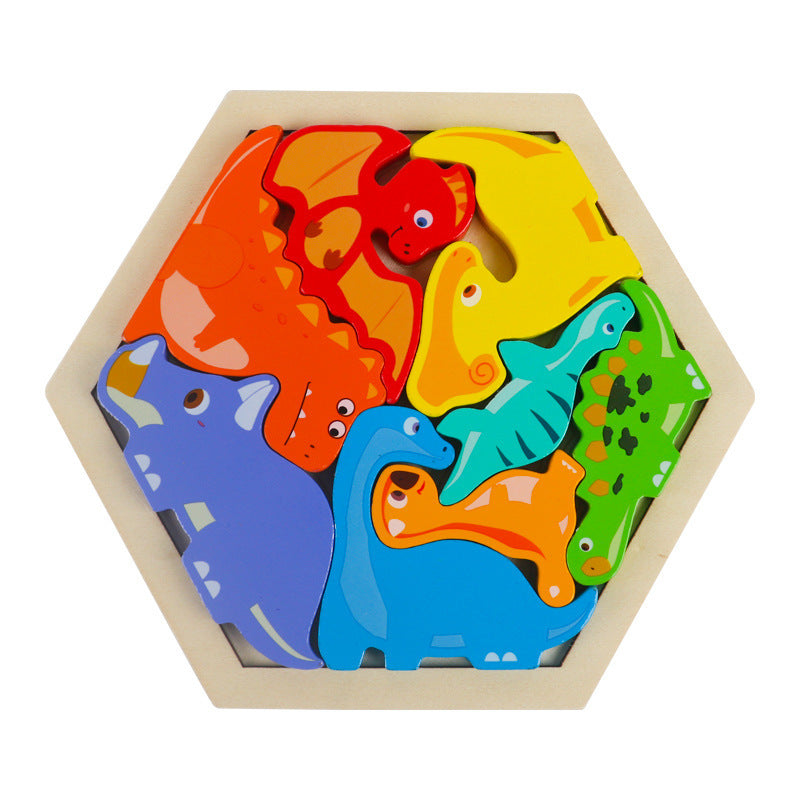
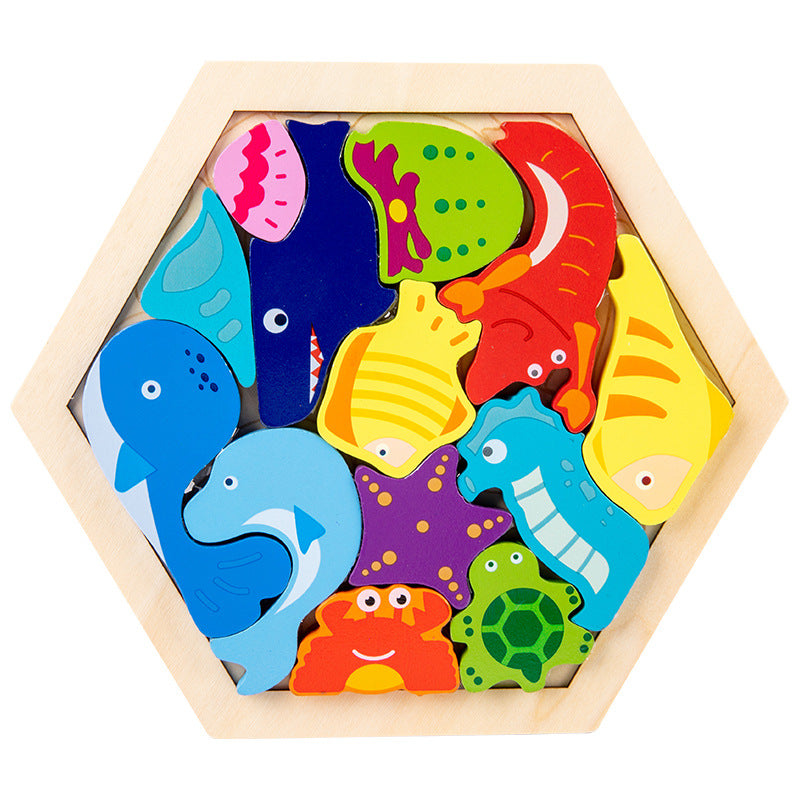
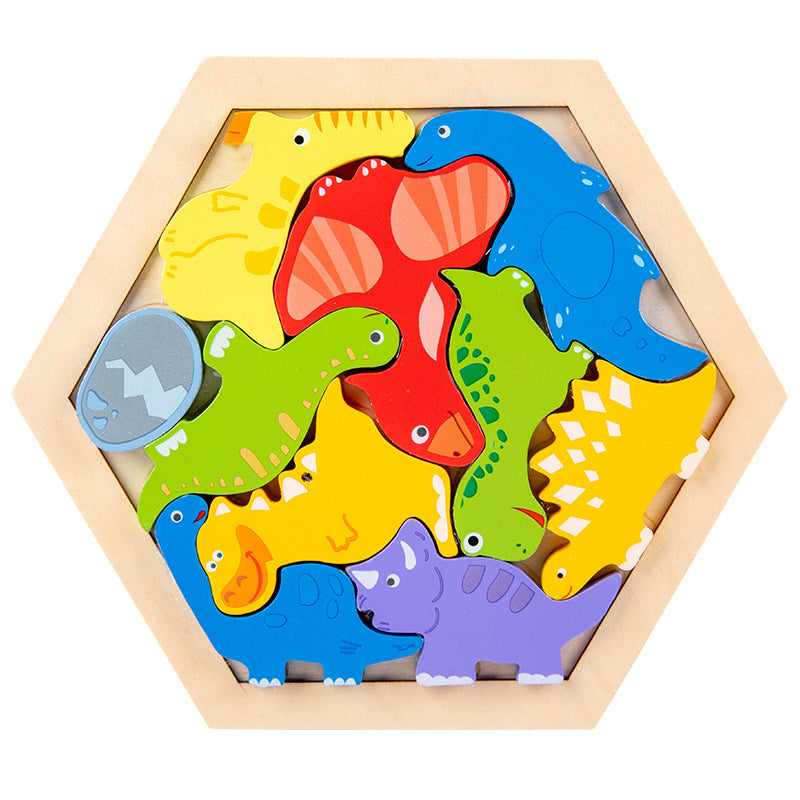
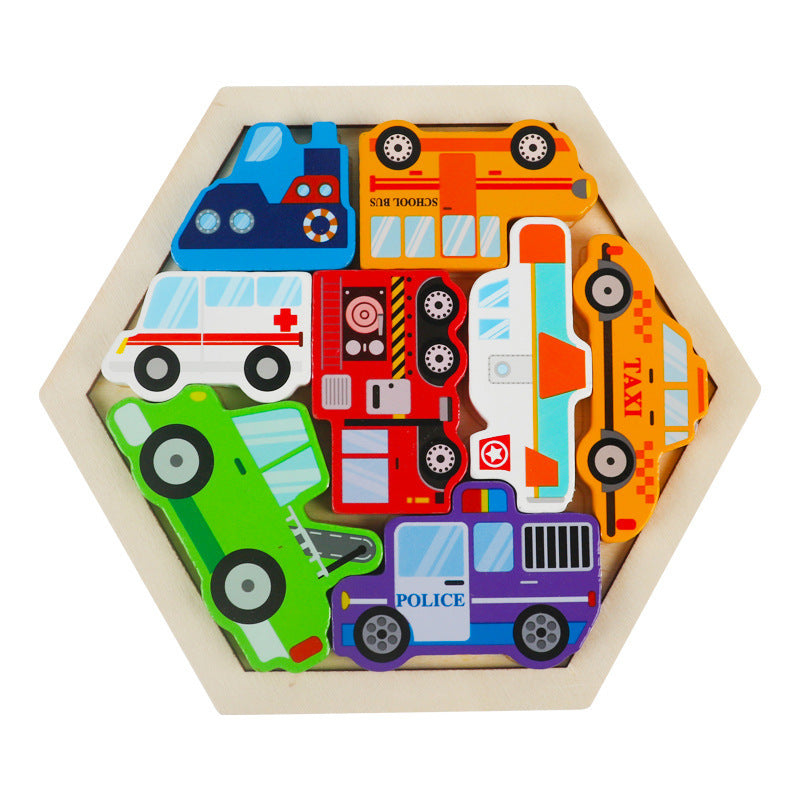
Make matching practice more engaging with the Kinmilo Hexagonal Wooden Theme Puzzle. Colourful chunky illustrated pieces fit together within a six-sided wooden frame. Select a familiar topic—animals, sea creatures, dinosaurs, transport or fruit and vegetables—to turn a simple puzzle into a conversation and an imaginative adventure.
Kinmilo Together Time: A Parent–Child Play Plan
Play Together. Grow Together. Turn Hexagonal Wooden Animal & Picture Puzzle into relaxed parent–child interaction. Begin with a short activity, respond to your child's interests and allow breaks.
- 1. Connect & demonstrate: Show one picture, shape or colour and ask 'Where should this go?'
- 2. Share the play: Take turns comparing and placing one piece at a time.
- 3. Grow together: Invite the child to choose a second category or make a two-piece pattern.
Adapt the activity for ADHD, autism and developmental or learning differences
Show just two choices and a visual model; accept pointing, gesture or AAC. For children with different communication needs, invite speech, pointing, gesture, eye gaze or AAC. A predictable start, limited choices and a clear stopping point can make play easier to join.
A note for families: Enjoy connection and meaningful participation rather than speed or perfect answers. These activities offer educational practice opportunities, not a medical treatment or a guaranteed developmental outcome. Follow the product's age and safety instructions, especially for detachable components.
Learning opportunities
The hands-on pieces encourage visual matching, spatial awareness, grip and placement, colour recognition, object naming, joint attention, problem-solving and turn-taking. Matching the edge of a piece to the hexagonal tray creates a useful opportunity to plan movements and practise trying a different orientation.
Step-by-step parent and caregiver guide
- Explore: let the child touch and examine two or three pieces before showing the complete set.
- Match: place one piece as an example and invite the child to find a piece with a similar colour or shape.
- Communicate: ask an easy either/or question—“Dinosaur or truck?”—and accept spoken, pointed, signed or AAC responses.
- Make a story: create a short narrative around the picture: “The dinosaur goes to the forest.”
- Work together: exchange turns and slowly decrease the level of physical or verbal prompting as confidence builds.
Adaptable for different learning styles
Autism spectrum: use an interest-led picture set and a consistent start–finish routine; avoid overwhelming instructions. ADHD: try short matching rounds, an achievable target and optional movement breaks. Developmental delay and intellectual disability: reduce the number of choices and repeat the same playful routine across days. Fine-motor or coordination difficulties: support the board on a flat, steady table and invite a comfortable grasp or assisted placement. The goal is meaningful participation and opportunities for skill practice—not treatment of any condition.
Product details and care
- Six-sided wooden inset puzzle frame with brightly illustrated thematic pieces
- Design selection: dinosaur, construction vehicles, marine life, wildlife, vegetables, farm animals, transport or fruit
- Easy to offer as a one-to-one activity or a small-group matching game
Wipe clean with a soft damp cloth and dry promptly. Store all pieces together. Provide adult supervision whenever small parts are used; choose activities appropriate to the child's developmental abilities.
Safety documents
Kinmilo maintains CPC and CE testing documentation for its products; documents can be requested from our customer support team.
Frequently asked questions
Is it inspired by Montessori or Waldorf approaches? Its open-ended matching and independent exploration suit Montessori-inspired activity time, while pretend storytelling can support Waldorf-inspired imaginative play.
Can my child use this without speaking? Absolutely—matching by sight, pointing, selecting and using AAC are all ways to participate.
How can we make it easier? Present fewer pieces, match one side together and increase the challenge in small steps.
Can it replace professional therapy? No. It is an educational play material for shared skill practice.
Couldn't load pickup availability