Kinmilo Magnetic Geometry Pattern Blocks Puzzle Box | 50–280 Piece Montessori Shape Learning Set
Kinmilo Magnetic Geometry Pattern Blocks Puzzle Box | 50–280 Piece Montessori Shape Learning Set
Build, Match, Imagine: Magnetic Geometry for Growing Thinkers
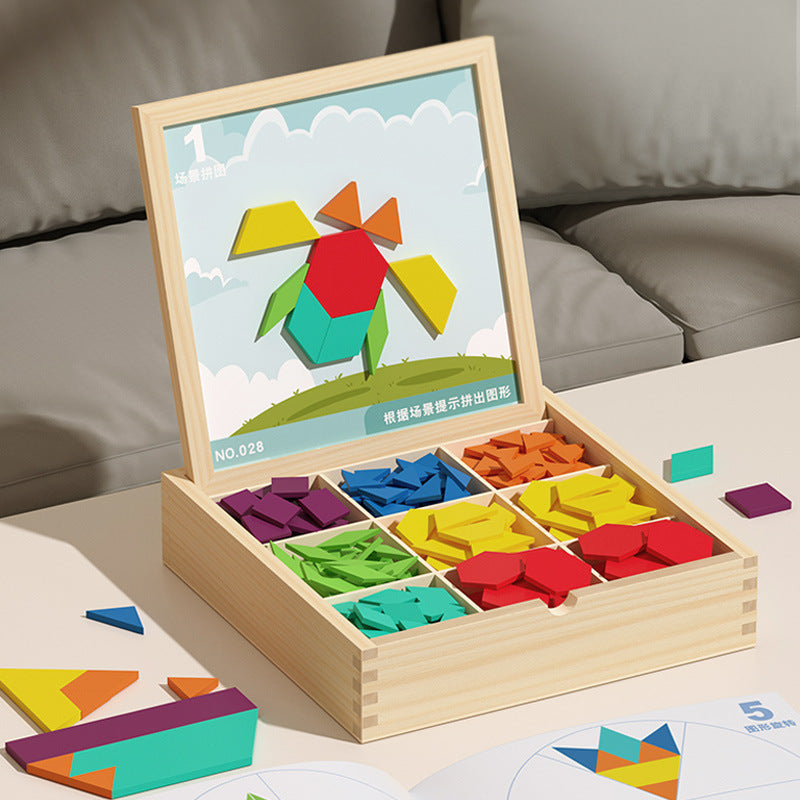
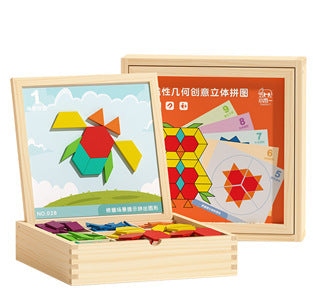
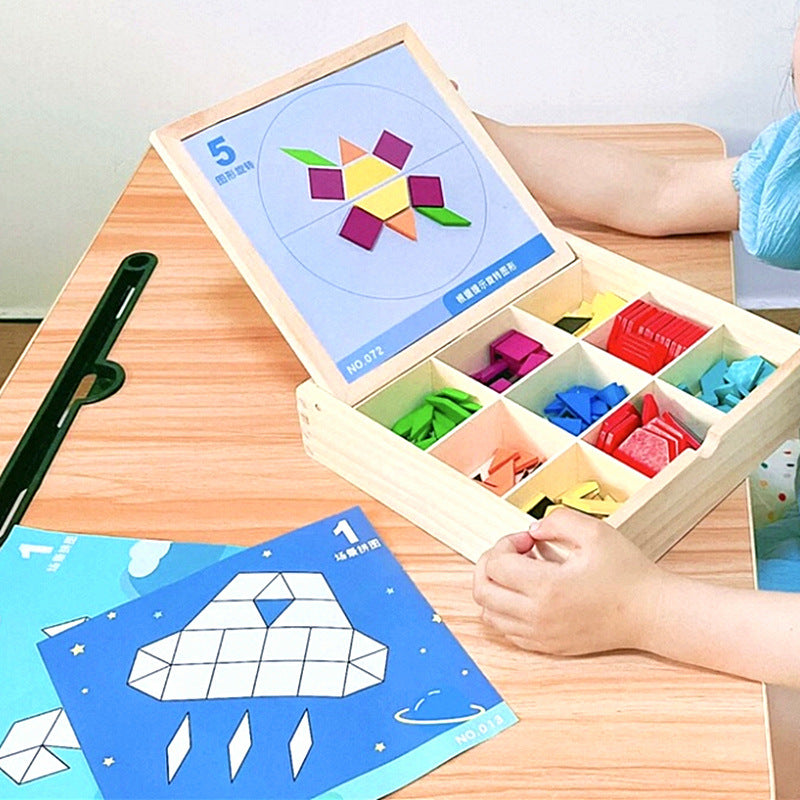
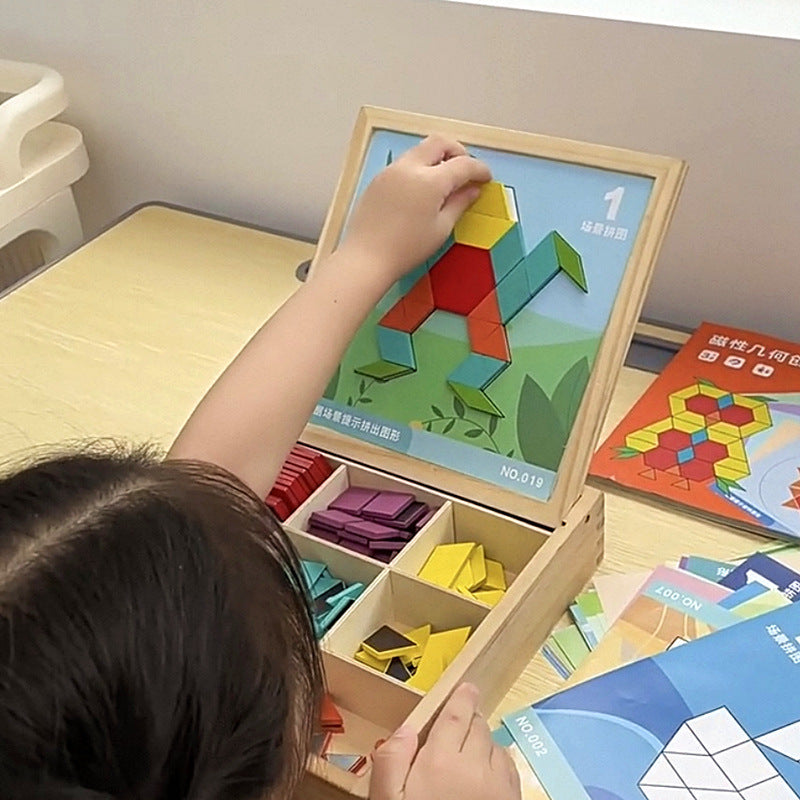
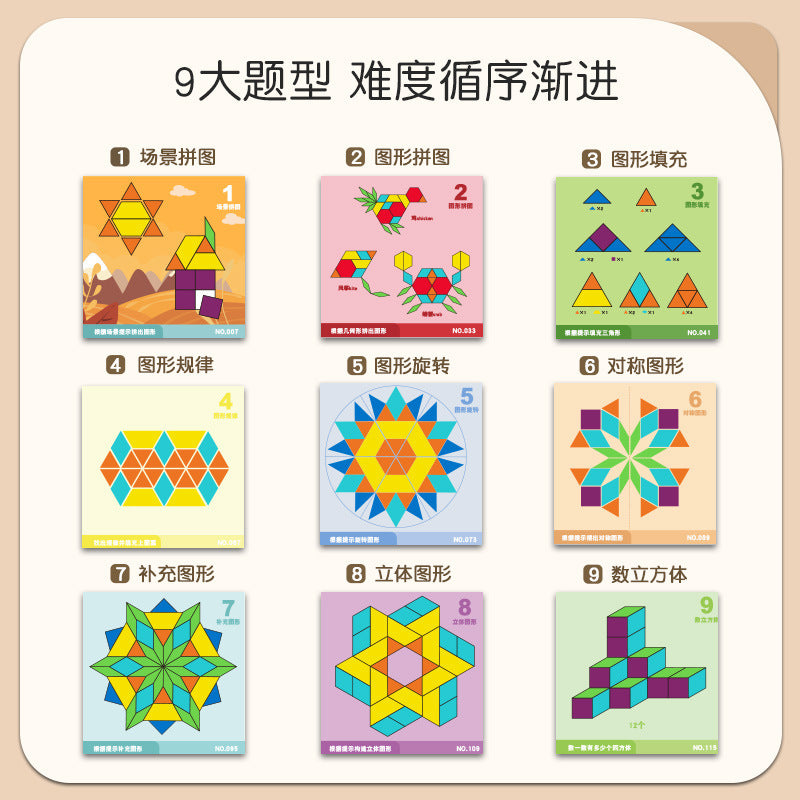
The Kinmilo Wooden Magnetic Geometry & Pattern Block Activity Box turns flat shapes into colorful pictures. Children choose pieces, follow design cards, explore symmetry, or create their own patterns on a magnetic drawing surface. A wooden storage-and-display box helps families keep the activity organized between play sessions. Select the piece-count kit that suits your space, preferred challenges and play routine—all within one product.
Kinmilo Together Time: A Parent–Child Play Plan
Play Together. Grow Together. Turn Magnetic Geometry Pattern Blocks Puzzle Box into relaxed parent–child interaction. Begin with a short activity, respond to your child's interests and allow breaks.
- 1. Connect & demonstrate: Demonstrate one switch, latch or gear and say 'Open, close' or 'On, off.'
- 2. Share the play: Take turns operating the same control and requesting 'again'.
- 3. Grow together: Create a simple two-step sequence and let the child lead.
Adapt the activity for ADHD, autism and developmental or learning differences
Use just one control initially and avoid unexpected lights or loud sounds. For children with different communication needs, invite speech, pointing, gesture, eye gaze or AAC. A predictable start, limited choices and a clear stopping point can make play easier to join.
A note for families: Enjoy connection and meaningful participation rather than speed or perfect answers. These activities offer educational practice opportunities, not a medical treatment or a guaranteed developmental outcome. Follow the product's age and safety instructions, especially for detachable components.
Choose Your Set
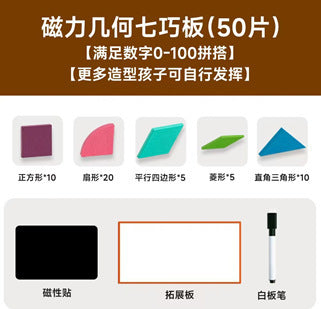
- 50-piece Starter Set: introduction to simple color and shape combinations; includes a magnetic board, expansion board and erasable marker shown in the product illustration.
- 144-piece Pattern Kit: more blocks for shape-copying and free design.
- 167-piece Pattern Kit: wider arrangement possibilities with illustrated design prompts.
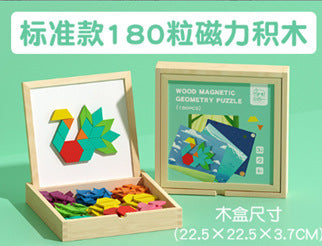
- 180-piece Standard Set: wooden box approximately 22.5 × 22.5 × 3.7 cm.
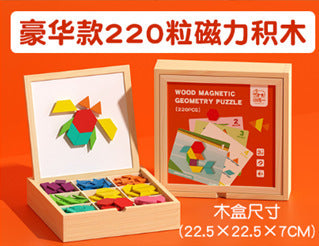
- 220-piece Deluxe Set: wooden box approximately 22.5 × 22.5 × 7 cm.
- 258-piece Creative Set: larger piece assortment for detailed patterns.
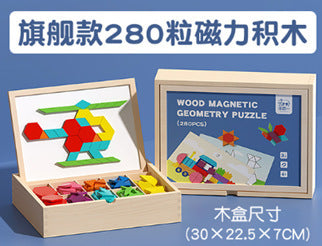
- 280-piece Flagship Set: wooden box approximately 30 × 22.5 × 7 cm and expanded blocks for ambitious pictures.
Piece counts refer to the illustrated kit options. Illustrations show the accessories and cards associated with each version; choose your desired version in the options above. The box measurements stated here apply to the individually documented models.
What Children Can Explore
- Early geometry: recognizing triangles, squares and other shapes, then combining them into larger forms.
- Spatial reasoning: rotating, positioning and comparing pieces to recreate patterns.
- Attention and flexible problem-solving: choosing a strategy, making an adjustment and trying again.
- Fine-motor practice: grasping, moving and arranging small wooden pieces.
- Communication: asking for a color or shape, giving simple directions and sharing creative ideas.
Step-by-Step Parent & Caregiver Activities
Activity 1 — Two-Shape Discovery
Place a square and a triangle on the table. Invite the child to point to or pick up a named shape. Demonstrate placing it on the board. Expand to a small three-piece house when ready.
Activity 2 — Copy a Picture Together
Choose a simple design card. First identify the colors, then build one corner of the picture together. Encourage the child to compare “what is next?” and choose a piece; allow them to follow the card in their own order.
Activity 3 — Make a Pattern, Then Change One Thing
Create a row of alternating colors or a little flower. Ask the child to change just one block, and talk about what looks different. This makes a flexible, low-pressure activity for visual comparison and problem-solving.
Activity 4 — Storytelling with Shapes
Invite a child to make a boat, bird, tree or imaginary animal, and tell a story about it. Accept speech, pointing, gestures or augmentative communication responses. The process of participating together matters more than the finished picture.
Adapting the Activity to Your Child
Autism (ASD) and sensory differences: start with a familiar card, lay out only the pieces needed for that design and use a first–then visual cue. Minimize competing materials if your child prefers a calmer activity. Free creation is equally welcome when card-based instructions are not appealing.
ADHD and high activity levels: divide a design into two- to five-minute mini-goals, use movement breaks between rounds and offer choices about whether to copy or invent. Avoid turning the play into a speed test.
Developmental delay or intellectual disability: begin with one shape and one color, demonstrate the action slowly, then offer a choice of two pieces. Reinforce the child's preferred communication method and repeat successful steps before increasing complexity.
Physical disabilities or fine-motor challenges: support the box at a comfortable angle, keep a small selection of shapes within reach and let children direct another person's placement using words, eye gaze or pointing if handling small blocks is difficult.
These are flexible learning and interaction ideas, not claims that the toy treats or changes any diagnosis.
Material, Sizes, Care & Safety
- Material: wooden storage/display frame and colored geometric magnetic blocks, with cards and accessories varying by chosen kit.
- 180-piece box: approximately 22.5 × 22.5 × 3.7 cm.
- 220-piece box: approximately 22.5 × 22.5 × 7 cm.
- 280-piece box: approximately 30 × 22.5 × 7 cm.
- Age guidance: ages 3+ with active adult supervision, particularly around small pieces.
- Care: wipe wooden pieces with a slightly damp cloth and dry completely. Store pieces in the box after play.
- Safety: inspect blocks regularly; stop use immediately if a piece is damaged or a magnet becomes exposed. Swallowed magnets require urgent medical assessment. Keep all small parts away from children under three.
- Safety documentation: Kinmilo's product documentation includes CPC and CE testing reports.
Frequently Asked Questions
Are the 50-, 144-, 167-, 180-, 220-, 258- and 280-piece versions separate products?
No. They are selectable kit options on this one Kinmilo product page.
How should a child begin if they feel overwhelmed by many pieces?
Offer only two or three shapes, complete one tiny pattern and put the unused pieces away. Gradually increase the selection according to interest.
Is this Montessori- or Waldorf-inspired?
The open-ended, hands-on pattern exploration complements Montessori-inspired child-led learning and can also support Waldorf-inspired imaginative play through storytelling with shapes.
Can a child use the puzzle without speaking?
Yes. Choices, pointing, gestures, eye gaze and AAC can all be used to request pieces and direct the play.
Can these magnetic puzzles treat autism, ADHD or developmental delays?
No. They offer supervised opportunities for play, communication, geometry and fine-motor practice.
Couldn't load pickup availability