From First Lines to Confident Creative Drawing
Bring calm, purposeful pen practice into everyday play with the Kinmilo Montessori-Inspired Reusable Tracing & Drawing Activity Collection. Choose the learning style that suits your child's interests: first lines, dotted pictures, matching games, numbers, letters, symmetrical drawing, puzzles or guided pictures. Every style lives on this single product page as a clearly named option so families can find a suitable starting point without searching through duplicate listings.
Kinmilo Together Time: A Parent–Child Play Plan
Play Together. Grow Together. Turn Montessori Reusable Tracing & Drawing Activity Cards into relaxed parent–child interaction. Begin with a short activity, respond to your child's interests and allow breaks.
-
1. Connect & demonstrate: Trace one easy line with a finger before using the marker or pen.
-
2. Share the play: Take turns making one short stroke while saying 'up' or 'round'.
-
3. Grow together: Invite the child to choose a longer path or draw a shape for you.
Adapt the activity for ADHD, autism and developmental or learning differences
Offer larger strokes, a comfortable grip and finger tracing as an alternative. For children with different communication needs, invite speech, pointing, gesture, eye gaze or AAC. A predictable start, limited choices and a clear stopping point can make play easier to join.
A note for families: Enjoy connection and meaningful participation rather than speed or perfect answers. These activities offer educational practice opportunities, not a medical treatment or a guaranteed developmental outcome. Follow the product's age and safety instructions, especially for detachable components.
Choose Your Learning Style
-
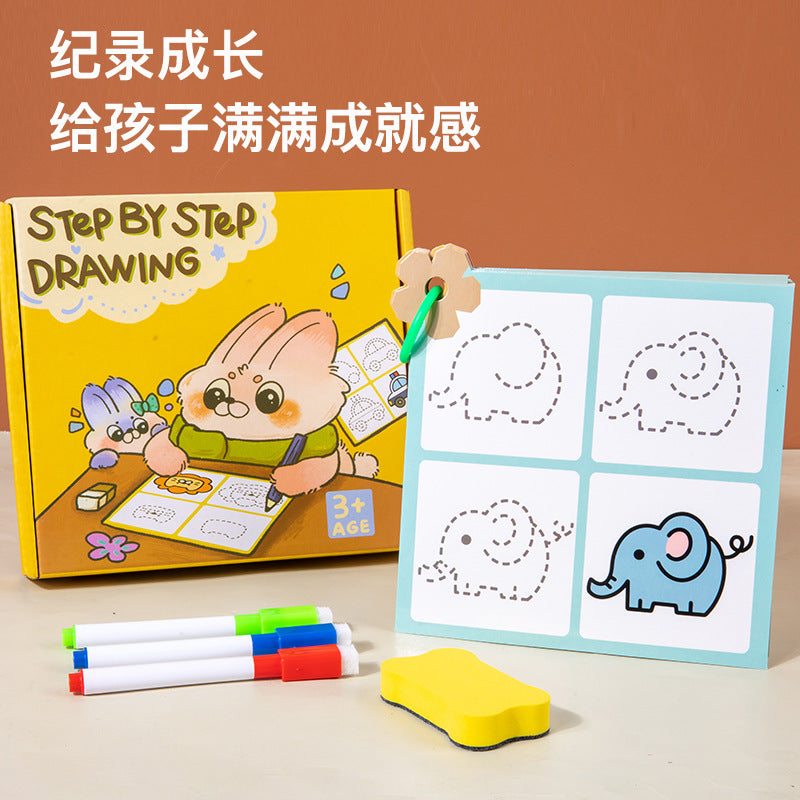
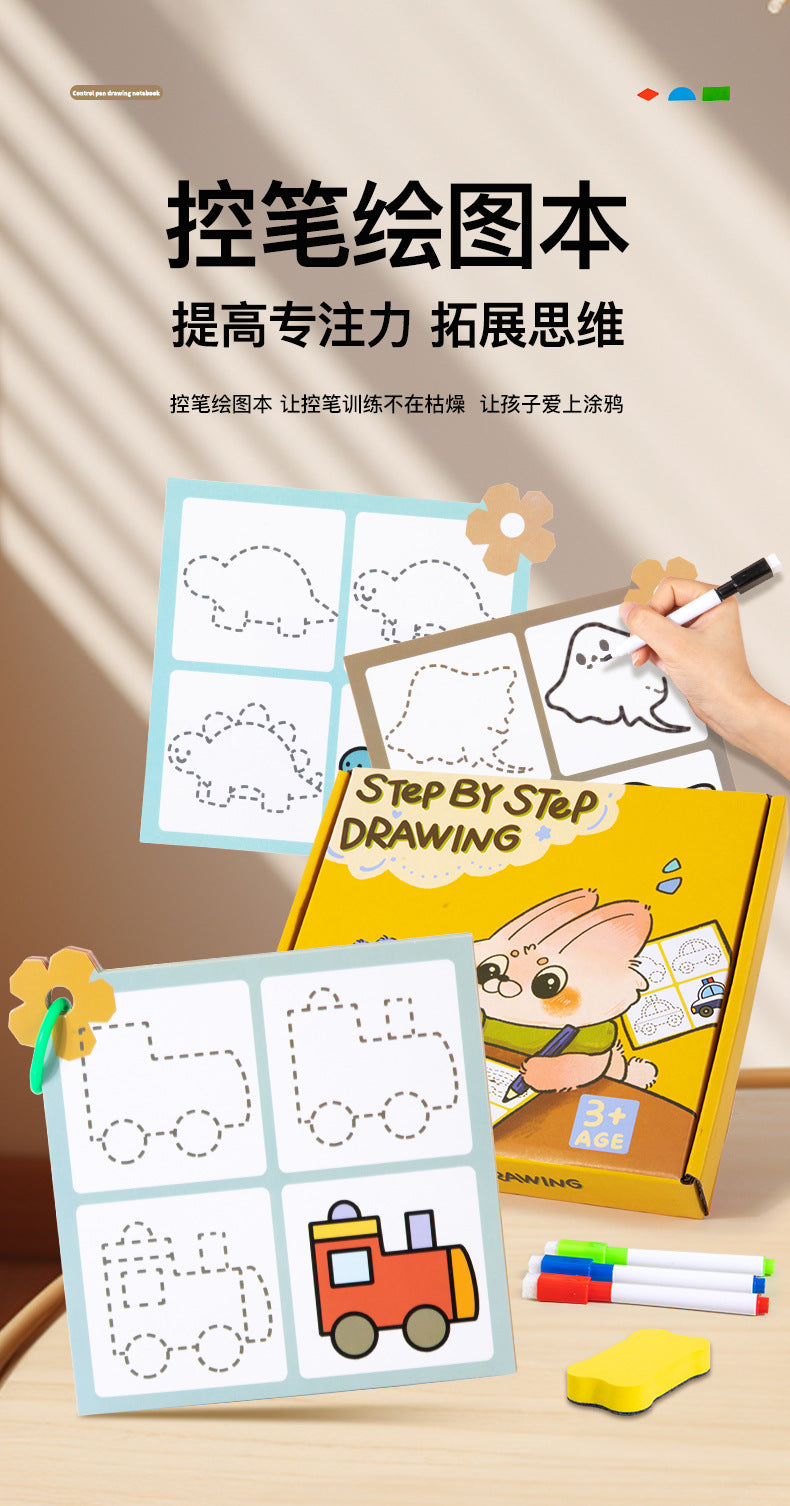
Step-by-Step Drawing: 30 double-sided picture cards, progressing from a dotted outline to a recognizable drawing.
-
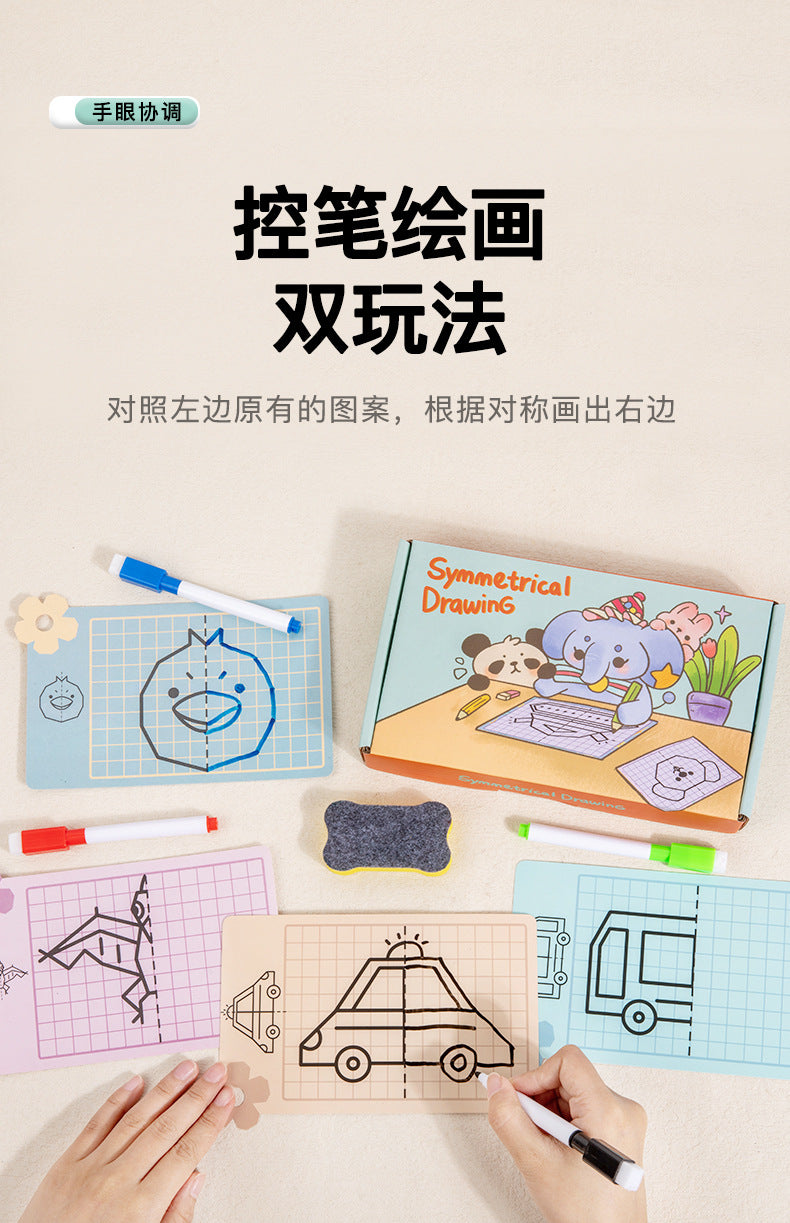
Symmetrical Drawing: 24 double-sided cards for drawing a reflected or matching half-picture.
-
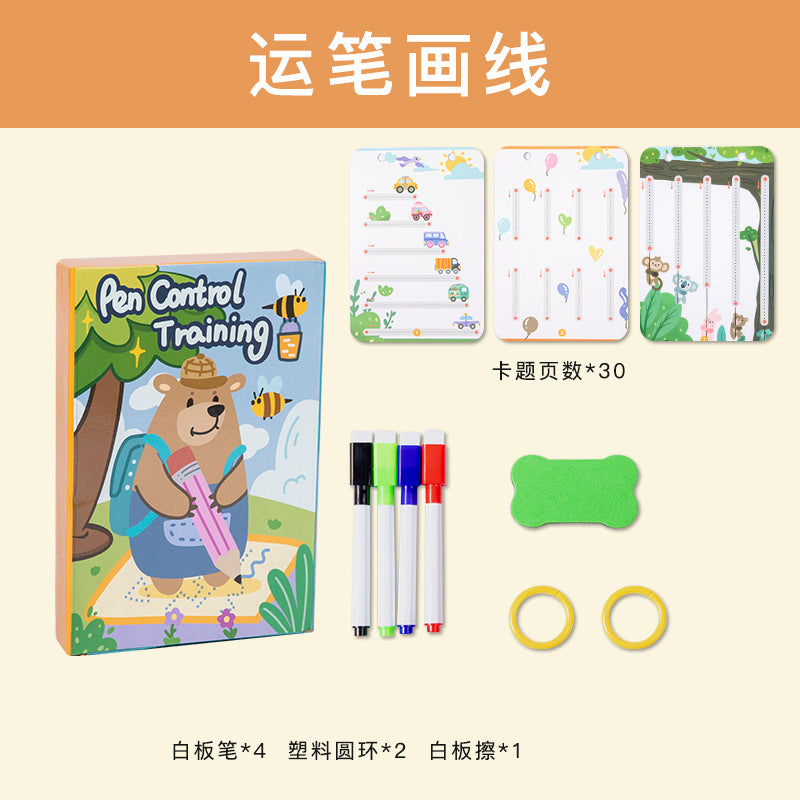
Pen Control Lines: 58 activities introducing paths, curves and tracing motion.
-
Pattern Drawing: 48 activities for exploring shapes and repeating graphic patterns.
-
Dot-to-Dot Pictures: 60 activities that invite children to complete illustrated outlines.
-
Left & Right Brain Tracing: 60 activities combining lines, loops and mirrored movement.
-
Whole-Brain Maze Practice: 38 activities exploring routes and visual paths.
-
Line Tracing, Matching Pairs, Alphabet Recognition, Number Practice, Dotted-Line Connection and Logic & Maze Games: themed 30-card activity options for targeted preschool practice.
Product Materials, Components & Dimensions
Printed paper-based activity cards with picture prompts, reusable drawing and tracing surfaces, and writing/erasing accessories according to the selected style. Choose your activity style above for its specific card count and illustrated contents. Verified Step-by-Step Drawing configuration: 30 double-sided drawing cards measuring 15.8 × 15.8 cm; box measuring 19.5 × 17.5 × 3 cm; included marker pens approximately 11.2 cm long; eraser approximately 7 × 3.8 cm; card ring approximately 3.6 cm across. The illustrated set weighs approximately 0.25 kg. Verified Symmetrical Drawing box: approximately 21 × 12.4 × 3 cm, with a product weight of approximately 0.17 kg. These are specific pack and component measurements, not universal measurements for all styles.
How Parents Can Introduce the Activity
-
Prepare a comfortable space: choose one card, place it on a stable tabletop and show the child the starting dot or picture.
-
Begin with finger tracing: follow the pathway with a finger before picking up the marker.
-
Demonstrate slowly: draw one short line while saying “start”, “follow” and “stop”. Invite the child to try the next line.
-
Offer a choice: ask whether to practise a vehicle, animal, letter, number or maze, depending on the chosen pack.
-
Take turns: one person starts a curve or mirrored drawing; the other finishes it, using gestures and pointing as needed.
-
Review with curiosity: describe the shapes, colors and pathways completed without comparing the result to someone else's work.
-
Wipe and revisit: clean reusable surfaces as directed, then repeat the same activity or choose a new one.
Activities for ADHD, Autism, Developmental Delay & Other Learning Needs
Children with ADHD: offer a two-minute mini-mission such as tracing two lines or completing one picture, followed by a movement break. Use an uncluttered table and present only one card at a time. Autistic children (ASD): use predictable first-then steps, demonstrate the task visually, allow a preferred picture first and offer a quieter setting when needed. Developmental delay: begin with finger paths or large strokes and use modeling, pointing or shared turns before expecting independent pen control. Intellectual disabilities: use one-step directions, everyday picture themes and plenty of practice with the same familiar card. Fine-motor difficulties: adapt the grip, support the forearm, secure the card and allow the child to trace or point rather than insisting on a perfect line. Communication differences: let children choose a card by pointing, gesture, AAC or words.
The emphasis is on encouraging participation, shared communication and opportunities to practise visual tracking, pencil movements and early pre-writing skills; the collection is not a diagnostic, medical or therapeutic treatment.
Montessori & Waldorf-Inspired Play
Independent choice, repetition and progressively challenging hand movements align with Montessori-inspired early learning. Creative pictures, storytelling and imaginative line-making also fit naturally into Waldorf-inspired play. Parents can combine guided practice with child-led exploration.
Care, Age Guidance & Safety
Recommended for adult-supervised preschool play, ages 3+. Use the drawing accessories only on the designated reusable surfaces, wipe with a slightly damp cloth when appropriate and allow materials to dry before storage. Keep rings and small accessories away from younger children. Kinmilo product testing documentation includes CPC and CE reports.
Frequently Asked Questions
What is the difference between the 13 options?
Each option is a different content theme or difficulty level. The displayed option names distinguish card or activity counts; select the exact style you want before adding to the cart.
Are these tracing cards suitable for children with autism or ADHD?
Yes. Parents and educators can adapt the session length, visual prompts, picture choices and amount of guidance to each child's interests and abilities.
How can I help a child who does not want to hold a marker?
Start by pointing or following paths with a finger, then gradually offer a marker when the child chooses to participate.
Can this be used in a Montessori or Waldorf-inspired classroom?
Yes. The activities encourage hands-on exploration, repetition and creative line-making, supporting Montessori-inspired child-led practice and Waldorf-inspired imaginative learning.
Is the card size the same for every style?
The 15.8 × 15.8 cm card measurement applies to the illustrated Step-by-Step Drawing configuration. Different learning styles may have different card and box dimensions.