Kinmilo Self-Correcting Matching Puzzle Cards – Numbers, Opposites, Colors & Daily Life
Kinmilo Self-Correcting Matching Puzzle Cards – Numbers, Opposites, Colors & Daily Life
Make a match, make a connection
Kinmilo Self-Correcting Matching Puzzle Cards help children explore early numbers, opposite concepts, familiar routines and colors through hands-on, screen-free play. Illustrated cards join together using thoughtfully shaped puzzle edges to provide physical feedback as children look for a matching pair or three-part picture. Four theme options live together on this single product page.
Kinmilo Together Time: A Parent–Child Play Plan
Play Together. Grow Together. Turn Self-Correcting Matching Puzzle Cards into relaxed parent–child interaction. Begin with a short activity, respond to your child's interests and allow breaks.
- 1. Connect & demonstrate: Set out one number or counter; model placing one more alongside it.
- 2. Share the play: Take turns counting or moving a counter in a small group.
- 3. Grow together: Compare two groups or ask the child to choose a counting challenge.
Adapt the activity for ADHD, autism and developmental or learning differences
Use concrete groups of one to three objects and visual prompts without pressure. For children with different communication needs, invite speech, pointing, gesture, eye gaze or AAC. A predictable start, limited choices and a clear stopping point can make play easier to join.
A note for families: Enjoy connection and meaningful participation rather than speed or perfect answers. These activities offer educational practice opportunities, not a medical treatment or a guaranteed developmental outcome. Follow the product's age and safety instructions, especially for detachable components.
Choose your learning theme
- Numbers: two-piece puzzles linking number symbols and related illustrations; practice naming and sequencing numbers.
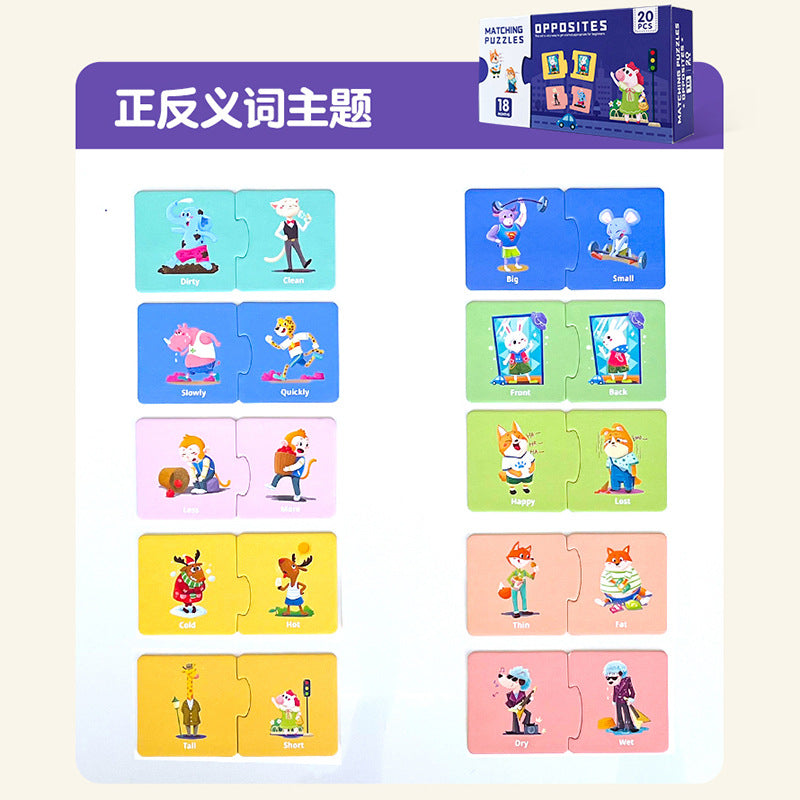
- Opposites: two-piece illustrated pairs that introduce concepts such as big/small and other contrasting relationships.
- Everyday Life: three-piece scenes inviting storytelling about recognizable objects, actions and routines.
- Colors & Objects: three-piece puzzles offering opportunities to group, identify and discuss colors and familiar items.
Design details
These are tactile, interlocking picture puzzles with an illustrated face and compact pencil-box-style storage packaging. The close-up product image shows an approximate 3 mm individual puzzle-piece thickness; this is the thickness of a piece, not the package size or overall puzzle dimensions. The two-piece and three-piece versions differ by theme.
Caregiver activity guide
- Start with two choices: display only one target piece and two potential partners. Name or point to the target image.
- Notice and compare: let the child examine colors, shapes or objects before touching the pieces.
- Fit the pieces: invite a gentle attempt to connect the pieces. Demonstrate rotating a card rather than forcing it.
- Use everyday language: ask “Which one matches?” “What comes next?” or use picture choices/AAC symbols for non-speaking learners.
- Expand the story: with daily-life pictures, turn a completed match into a short routine such as wash, dress, eat or tidy up.
- Celebrate and reset: sort pieces by theme, put them away together, and build predictable finishing routines.
Thoughtful opportunities for inclusive development
Families supporting ADHD, autism spectrum disorder (ASD), developmental delay or intellectual disability can adapt this activity using shorter sessions, reduced visual clutter, extra wait time and consistent visual prompts. Repeating a match together provides opportunities for attention, choice-making, finger control, early vocabulary and functional communication. The cards are learning materials, not a medical treatment.
FAQ
What does self-correcting mean? Each pair or set is designed with matching interlocking edges so children can test whether the pieces fit, without needing an electronic device.
What is the difference between two-piece and three-piece versions? Numbers and opposites use two-piece matching; color and everyday-life themes use three-piece picture sets.
How do I teach a child with limited verbal communication? Model the completed match, offer two options, point and use any established AAC system or visual schedule. Spoken answers are optional.
Are these compatible with Montessori or Waldorf learning approaches? Yes. Independent hands-on matching complements Montessori-inspired learning, while object stories and imaginative conversations support Waldorf-style play.
Do Kinmilo products have test reports? Kinmilo identifies CPC and CE test reports for its products.
Safety: suitable for supervised age-appropriate play; keep all small pieces away from children under 3 and anyone who may put small objects in the mouth.
Couldn't load pickup availability