Kinmilo Sensory Motion Activity Collection – Bead Mazes, Ball Tower & Rainmaker Tubes
Kinmilo Sensory Motion Activity Collection – Bead Mazes, Ball Tower & Rainmaker Tubes
Explore, move, listen and repeat – thoughtful sensory play for little hands
Kinmilo's Sensory Motion & Cause-and-Effect Activity Collection brings three complementary ways to explore: wooden wire bead mazes, a colorful hammer-and-ball spiral tower, and clear rainmaker tubes. Select a specific activity style to create a hands-on learning moment suited to your child's interests. Each option is a separate toy design, not a set containing every photographed item.
Kinmilo Together Time: A Parent–Child Play Plan
Play Together. Grow Together. Use your Sensory Motion Activity Collection as a starting point for relaxed, child-led interaction. Try one short activity, and follow your child's interests, developmental stage and comfort.
- 1. Connect & demonstrate: Choose one spinning or motion element. Show a gentle movement and say, “Look how it turns!”
- 2. Share the play: Take turns setting it in motion and watching what changes; pause for a request of “again” using any communication mode.
- 3. Grow together: Compare two speeds or directions, or let your child show you a favourite movement to copy.
Adapt play for ADHD, autism and different learning needs
For sensory differences, allow your child to control the speed or end the activity. Keep sessions short and supervise moving components.
Caregiver tip: Children can respond through speech, gestures, pointing, eye gaze or AAC. Support their choices, avoid forcing performance, and celebrate moments of shared play. These are opportunities for learning and connection, not treatment for ADHD, autism or learning disabilities and not a guarantee of a particular outcome. Follow the product-specific age and safety guidance.
Explore the activity styles
- Wooden wire bead mazes: slide bright beads along curved rails, follow an animal or fruit character and count pieces as they move. Different base and theme designs are selectable.
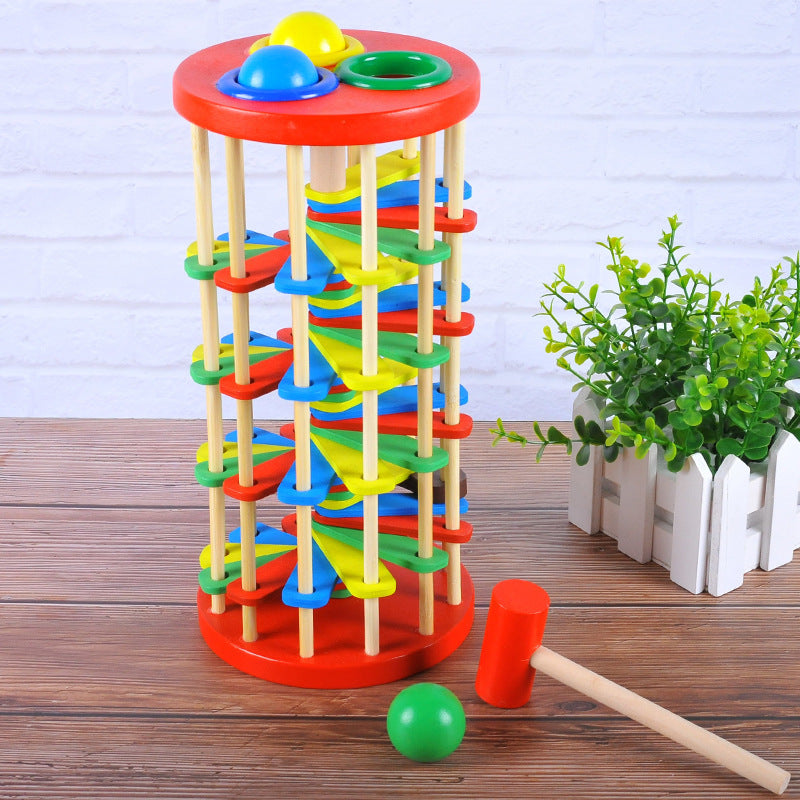
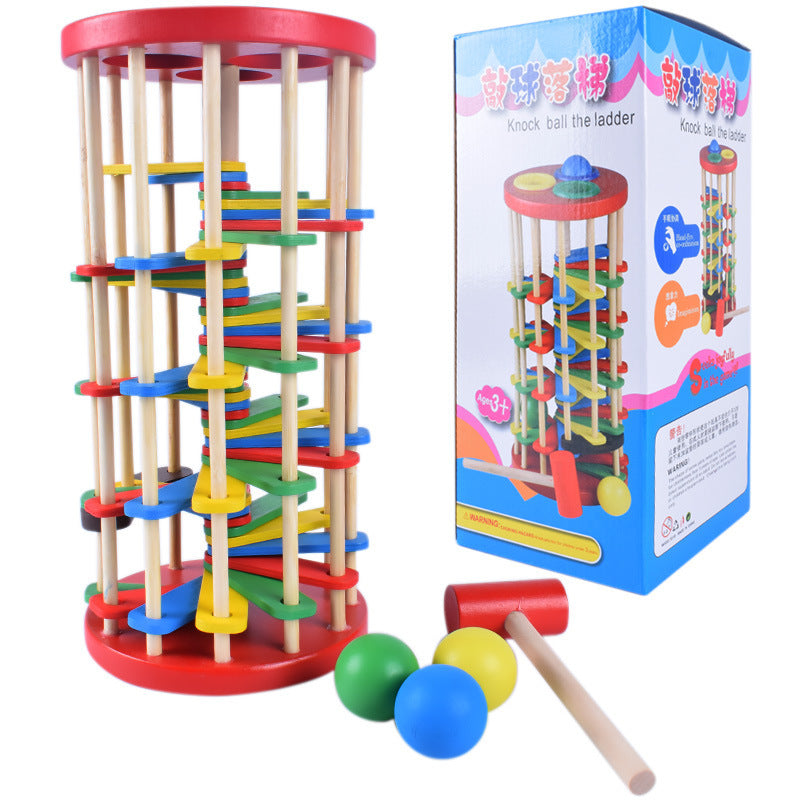
- Spiral hammer-and-ball tower: place the colored balls at the top, tap with the included mallet and watch them travel downward through a twisting tower. A simple, satisfying introduction to movement and cause-and-effect.
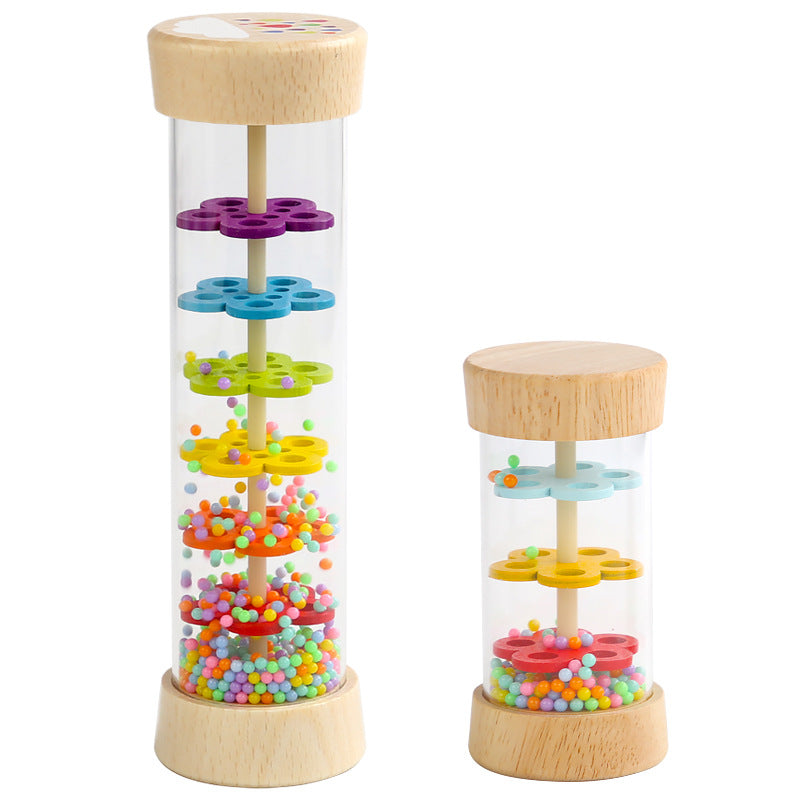
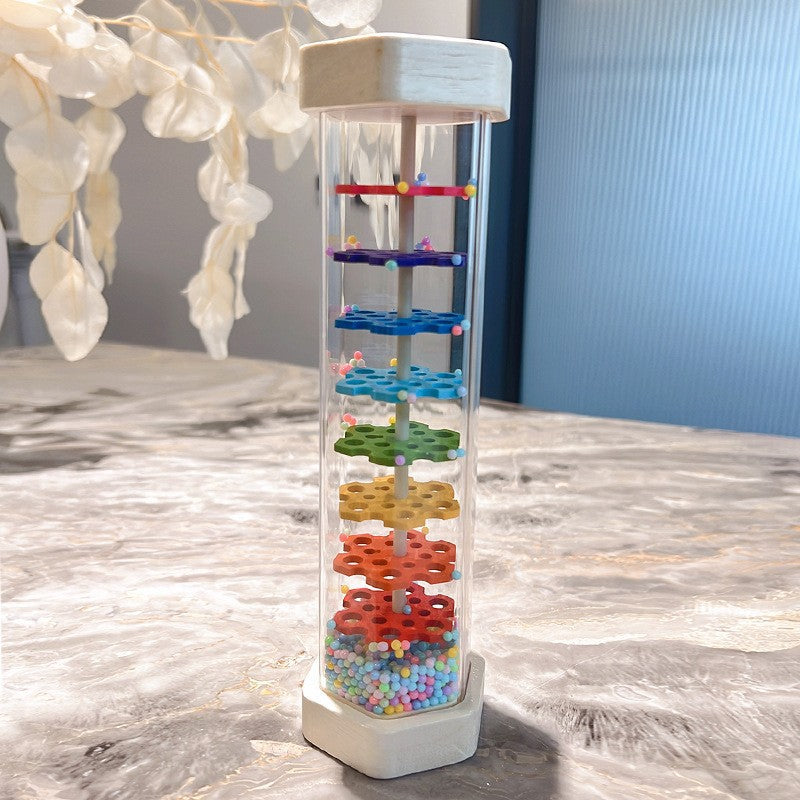
- Rainmaker sensory tube: turn the transparent tube slowly to watch small colorful pieces tumble through interior shelves while hearing the gentle cascading sound. Choose the size that suits the play space.
Five simple caregiver-led learning activities
- Watch and name. Demonstrate one move with a slow description: “up, over, down,” or “ready, roll!” Let your child choose which motion happens next.
- One-step imitation. Invite your child to slide one bead, tip the rainmaker once, or place one ball. Use a visual prompt or demonstration rather than lengthy directions.
- Color hunt and counting. Pick a color together and count one, two or three matching pieces. For younger learners, begin with “same” and “different.”
- My turn, your turn. Use a simple turn card, gesture or AAC symbol to choose who moves next. Build predictable pauses into the game.
- Story and sequencing. Make a bead the character in a story, predict where the ball will emerge, or describe what happens first and last when the rainmaker turns.
Adaptable ideas for diverse learning needs
For autistic children (ASD): use a predictable routine with a clearly marked beginning and finish. Let the child control visual and sound input; stop or offer a quiet alternative if an activity feels overwhelming.
For children with ADHD: choose short 2–5 minute challenges with a clear goal, immediate visible feedback and opportunities for movement between rounds. Use “one ball, one turn” as a repeatable success step.
For developmental delay or intellectual disability: begin with one material and one action. Model slowly, allow extra processing time and praise exploration rather than insisting on a correct answer.
For physical or coordination support needs: place the toy on a steady, reachable surface. A caregiver can stabilize it or help with reaching while the child chooses colors, directions or pace using words, gestures or AAC.
Verified dimensions by selected style
- Wooden animal bead maze, pictured larger rectangular base: 22.5 × 22.5 × 15 cm (product dimensions shown in the design photograph).
- Wooden fruit bead maze, pictured alternative base: 22.5 × 17 × 15 cm (product dimensions shown in the design photograph).
- Rainmaker sensory tube, small: 9.5 cm tall × 4.7 cm across.
- Rainmaker sensory tube, medium: 19.5 cm tall × 5.6 cm across.
- Rainmaker sensory tube, large: 22.5 cm tall × 6.7 cm across.
All measurements above describe the assembled toy shown, not carton or packing dimensions. Other bead maze bases and the ball tower have their own format and are not assigned dimensions from another style.
Materials and learning environment
Depending on your selection, designs feature a shaped wooden base and colorful curved bead tracks, a multi-level ball-motion tower with tapping mallet, or a transparent sensory cylinder with wooden-style end caps and colorful internal pieces. Set up on a stable table or floor surface with adult supervision appropriate to your child's needs and the product's age marking. Please keep the play area clear of other small objects.
Our approach is grounded in Montessori-inspired hands-on repetition, choice-making and sensory discovery, with imaginative storytelling compatible with Waldorf play principles. Kinmilo maintains CPC and CE testing reports for its product range. These activities offer practical opportunities for engagement and skill practice rather than a treatment or developmental guarantee.
Frequently asked questions
Which style is easiest to start with?
Choose an action the child already enjoys: slide beads for controlled finger movement, watch the ball tower for visual tracking, or gently invert a rainmaker for a slower-paced sensory experience.
How can I involve a child who does not speak?
Offer a photo choice or AAC symbols for “again,” “stop,” “red,” “my turn” and “your turn.” The child can direct a caregiver's movements.
Is it appropriate for ADHD, autism or developmental delay?
Activities can be adapted to different attention, motor and sensory preferences. Focus on enjoyment, agency and small achievable actions.
Do I get all the toys shown in the gallery?
No. Choose the specific Activity Style and size you want. Product images illustrate the styles available across the collection.
Is this a Montessori or Waldorf toy?
Both child-led discovery and story-based play can be incorporated using Montessori and Waldorf-inspired approaches.
What about compliance documentation?
Kinmilo's CPC and CE product testing documentation supports the product range.
Couldn't load pickup availability