Kinmilo Wooden Fishbone Color Matching Game – 120 Pattern Challenges
Kinmilo Wooden Fishbone Color Matching Game – 120 Pattern Challenges
Kinmilo Wooden Fishbone Color Matching & Pattern Game
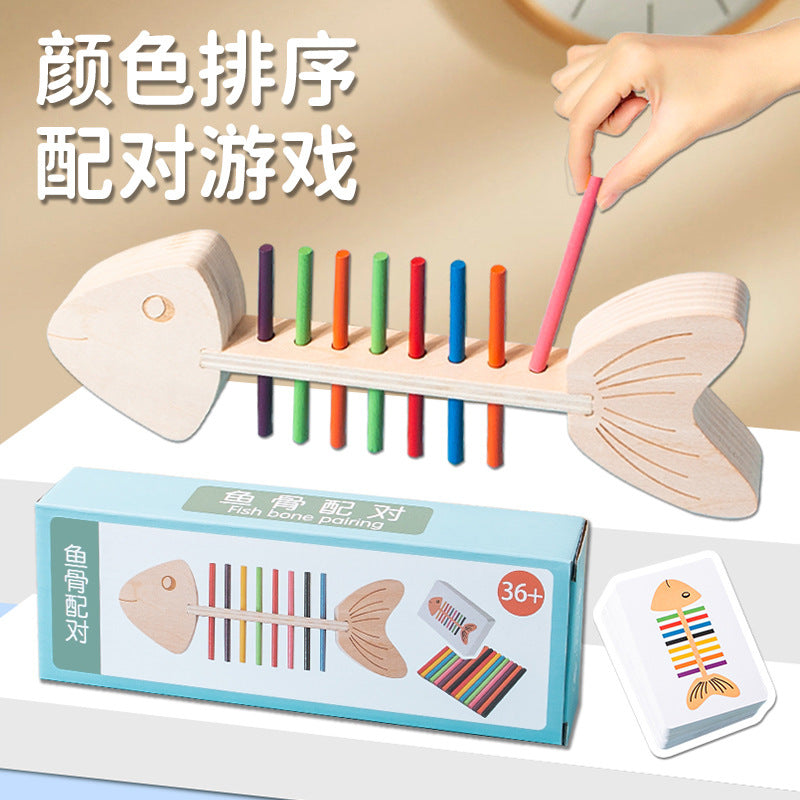
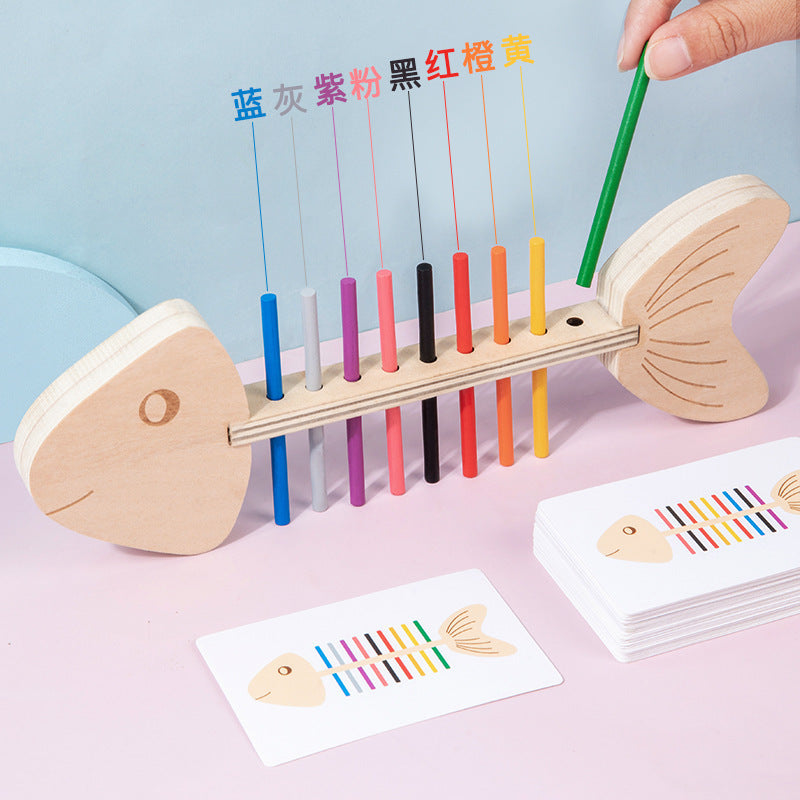
Turn colors into a playful conversation. This fish-shaped wooden matching game invites children to place colorful rods into the fishbone frame, copy sequences from illustrated challenge cards, compare patterns, and invent their own designs. A hands-on, screen-free way for parents, caregivers, and early-years educators to create meaningful shared play.
Kinmilo Together Time: A Parent–Child Play Plan
Play Together. Grow Together. Turn Wooden Fishbone Color Matching Game into relaxed parent–child interaction. Begin with a short activity, respond to your child's interests and allow breaks.
- 1. Connect & demonstrate: Choose one clear shape and demonstrate positioning the first piece.
- 2. Share the play: Take turns fitting pieces into a small pattern or space.
- 3. Grow together: Invite the child to invent a design for you to copy.
Adapt the activity for ADHD, autism and developmental or learning differences
Use two pieces and a finished visual model to reduce complexity. For children with different communication needs, invite speech, pointing, gesture, eye gaze or AAC. A predictable start, limited choices and a clear stopping point can make play easier to join.
A note for families: Enjoy connection and meaningful participation rather than speed or perfect answers. These activities offer educational practice opportunities, not a medical treatment or a guaranteed developmental outcome. Follow the product's age and safety instructions, especially for detachable components.
What Makes This Activity Special
- Fish-shaped wooden frame: easy-to-understand visual layout for placing, removing, and rearranging colored rods.
- 60 double-sided activity cards with 120 challenges: picture prompts for color matching, pattern copying, and progressively more independent work, as pictured in the product materials.
- Material: wood frame and colored wooden rods, with printed task cards and a presentation box.
- Dimensions: fishbone activity frame measures approximately 23.5 cm long × 7.8 cm high on the product size diagram. These are toy dimensions, not package dimensions.
- Product weight: approximately 0.2 kg as listed in the product specification.
- Age guidance: 36 months and older, with adult supervision.
How Parents Can Play: Five Practical Activities
- Choose a color. Show two rods and ask, “Can you find the blue one?” Accept pointing, looking, signing, or speaking as a response.
- Copy a simple sequence. Start with only two colors (red–blue), model the pattern slowly, and invite your child to place the matching rods.
- Take turns. Say “My turn, your turn,” and take turns adding one rod at a time. Pause so the child can initiate the next move.
- Find the difference. Create two similar sequences and ask what changed. If needed, point to the first mismatched color and demonstrate.
- Make your own fish. Invite the child to design a rainbow, favorite-color pattern, or imagined fish. Describe their choices rather than insisting on a correct result.
Adaptable Activities for Different Learning Needs
For autistic children (ASD): present one clear card at a time, use the same short instruction, and show a finished example. Let a child who prefers visual communication point to a rod or hand it over rather than requiring speech. Offer a quiet workspace if sensory input feels overwhelming.
For children with ADHD or high activity levels: use short two-to-five-minute rounds with a visible finish line (“Three cards, then a movement break”). Let the child help select the next challenge. Celebrate completion of each small step.
For children with developmental delays or intellectual disabilities: begin with just two rods and two matching spaces. Place a model beside the fish. Demonstrate, guide only as much as needed, then gradually reduce prompts as the child becomes comfortable.
For children working on fine motor coordination: encourage a comfortable pinch grasp and slow, intentional rod placement. Use hand-under-hand demonstration where welcomed, and allow rest breaks.
For children using AAC or limited spoken language: pair colors with picture symbols or communication buttons for “red,” “blue,” “more,” “help,” “finished,” and “my turn.” Meaningful participation does not depend on verbal answers.
Montessori-Inspired & Open-Ended Play
The visual matching, hands-on repetition and freedom to choose a challenge are inspired by Montessori-style child-led learning. Open-ended color combinations also create imaginative play opportunities associated with Waldorf-influenced activities. This is a play-and-learning resource, not a therapeutic treatment or a medical device.
Safety & Product Documentation
Recommended for ages 3+. Supervise use, keep individual rods and cards away from children who mouth small objects, and inspect the wooden frame and accessories before play. Kinmilo maintains CPC and CE compliance documentation for its children's products.
Frequently Asked Questions
Q: Can a child with autism use this without speaking?
A: Yes. Matching can be done by pointing, selecting colors, or placing rods; spoken language is optional.
Q: Is this suitable for children with ADHD?
A: The activity can be adapted into short, structured rounds that offer opportunities to practice attention, taking turns and following simple sequences.
Q: How should a parent introduce the cards?
A: Begin with a simple two-color pattern, demonstrate once, then gradually introduce cards with more colors and steps.
Q: Does the toy teach colors or mathematics?
A: It provides opportunities for color naming, matching, sorting, comparing and early pattern recognition through shared play.
Q: Is it Montessori or Waldorf inspired?
A: Its child-led, tactile, repeatable play design is Montessori-inspired and also supports open-ended imaginative activities.
Q: How do I care for the wooden pieces?
A: Wipe with a slightly damp cloth and dry completely; do not immerse in water.
Couldn't load pickup availability