Kinmilo Wooden Layered Landscape Puzzle – Rainbow, Flowers & Mountain
Kinmilo Wooden Layered Landscape Puzzle – Rainbow, Flowers & Mountain
A landscape puzzle that turns every small discovery into a shared moment
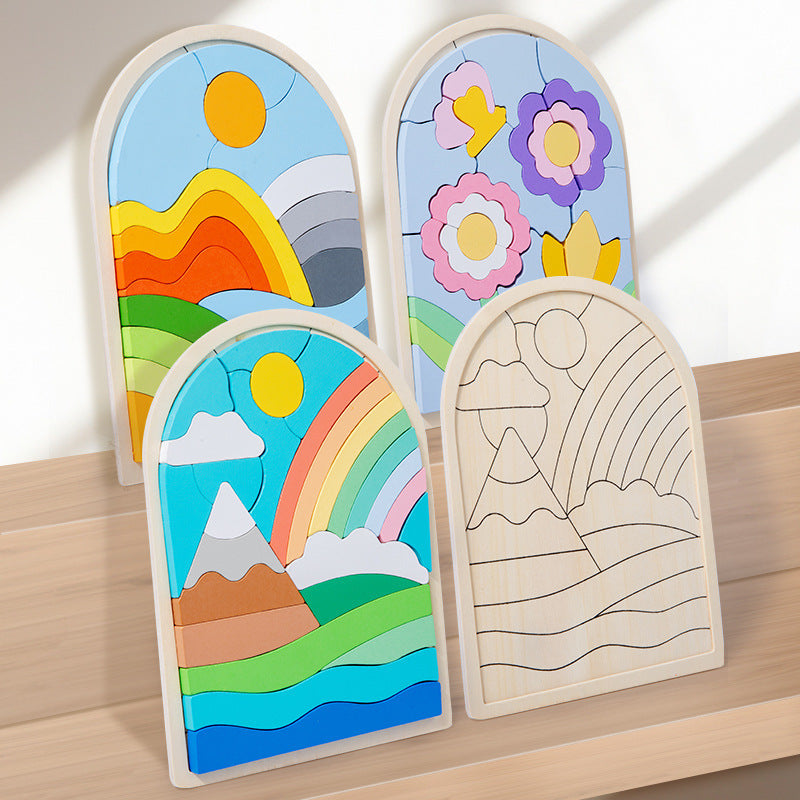
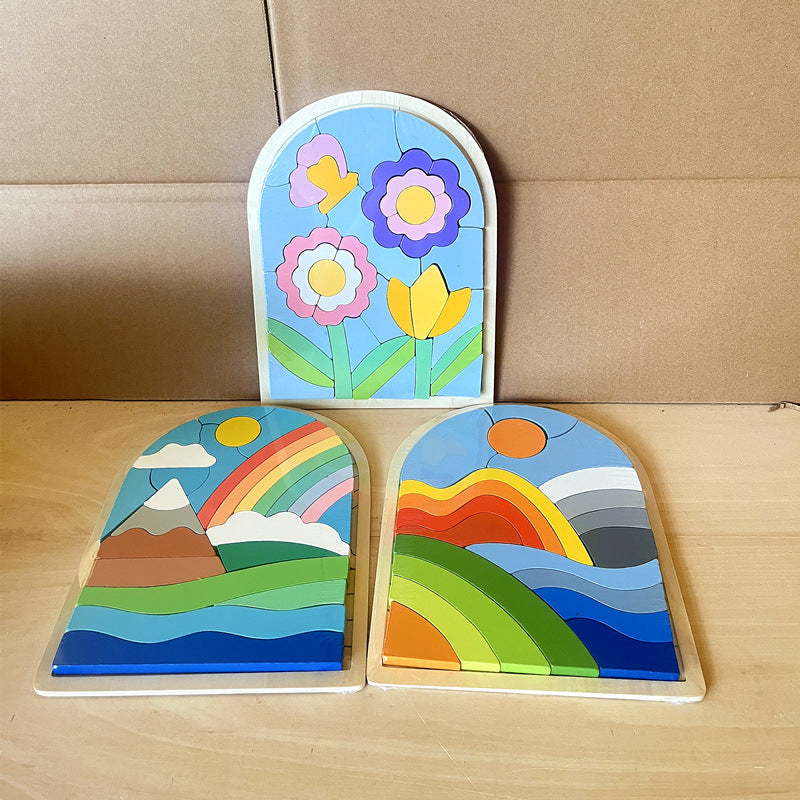
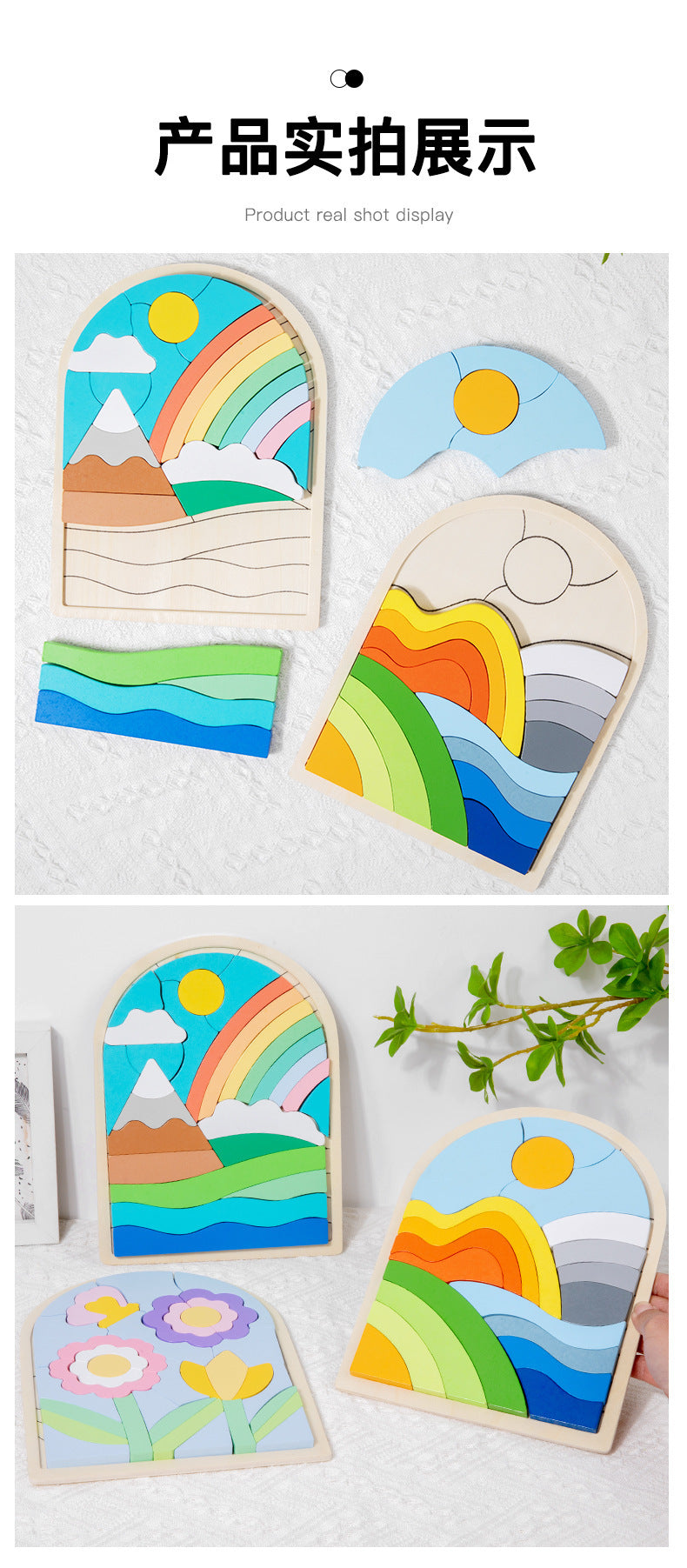
Bring colour, nature and hands-on discovery into your child's day with the Kinmilo Wooden Layered Landscape Puzzle. Each arched wooden board features a series of shaped layers that fit together to create a complete picture. Children can explore sunset hills, a flower garden, or a rainbow mountain scene, matching curves, colour boundaries and outlines as they build their picture piece by piece.
Kinmilo Together Time: A Parent–Child Play Plan
Play Together. Grow Together. Explore Wooden Layered Landscape Puzzle as a shared parent–child activity. Begin with one short, enjoyable interaction and follow your child's pace.
- 1. Connect & demonstrate: Pick one picture or shape and show a possible matching spot.
- 2. Share the play: Take turns selecting and placing a piece while describing its colour or image.
- 3. Grow together: Offer a second matching task or let the child invent a small sorting rule.
Inclusive play for ADHD, autism and different developmental or learning needs
Show only two choices to start and accept non-speaking responses. Children can join through words, actions, pointing, eye gaze, signs or AAC. Offer short rounds, visual prompts and control over breaks as needed.
Caregiver note: Build moments of connection and participation, not a test of speed or correctness. These are educational practice opportunities, not treatments or guarantees of progress. Follow the specific product's age and safety advice, with supervision around detachable parts.
This Montessori-inspired wooden learning puzzle offers a welcoming activity for families, early-years classrooms, special education settings and caregivers. It can be used for independent discovery or relaxed one-to-one play without rushing toward a perfect result.
What children can practise through play
- Visual discrimination: noticing differences between similar colours, outlines and curved layers.
- Fine-motor coordination: picking up, turning and placing wooden pieces inside the arched frame.
- Spatial reasoning: working out where pieces belong in relation to one another.
- Sequencing and problem-solving: deciding whether to start with the sky, hills, flowers or bottom layers.
- Language and communication: naming colours, describing scenes and using simple phrases such as “your turn” and “next piece.”
- Confidence through repetition: revisiting a familiar scene and celebrating each step of participation.
Choose your landscape design
- Sunset Hills: warm sunshine, rolling coloured hills and curved blue landscape bands.
- Flower Garden: colourful blossoms and leaf shapes for nature-themed storytelling.
- Rainbow Mountain: mountain, cloud, rainbow and layered green scenery.
Each design is sold as one complete puzzle board in the selected pattern; choose a design using the options above.
Size, materials and construction
- Puzzle board: approximately 17.2 cm wide × 22.7 cm high (6.77 × 8.94 in), measured from the illustrated board-size chart.
- Material: wood, with a fitted arched tray and coloured puzzle pieces.
- Approximate product weight: 0.2 kg.
- Recommended age: 3 years and above.
- Safety documentation: CPC and CE testing reports are maintained for this product range.
The measurements above describe the assembled puzzle board, not a shipping carton. Individual layer pieces differ in size and shape.
Parent and caregiver activity guide
1. Begin with two pieces
Lay out the wooden frame and just two large sections. Invite your child to feel the edges and compare the curves. Say “Find where the blue piece goes” rather than giving several instructions at once. Gradually introduce more pieces once the child is comfortable.
2. Make colour-matching a conversation
Place three coloured pieces side by side. Ask “Which piece matches this colour?” Accept pointing, gestures, a communication card or spoken answers. Repeat the colour word naturally, without turning the activity into a test.
3. Build a picture together
Take turns placing one piece each. Demonstrate first, then pause to offer the child a chance to participate. You can describe what appears in the scene: “Here is the mountain. Now the rainbow is above it.”
4. Try memory and sequencing games
Once your child knows the puzzle, show the completed picture, remove two sections and ask which comes first. For older children, mix the pieces and invite them to plan the order independently.
Play adaptations for different learning needs
Autism spectrum and sensory preferences
Use a predictable three-step routine: look, choose and place. Offer one design at a time and keep the table clear. If bright colours feel overwhelming, show only a few sections. Encourage shared attention without requiring eye contact or spoken responses.
ADHD and high activity levels
Try short, engaging rounds of two to five minutes. Give each round a clear mini-goal, such as finishing the sky. Build in movement breaks and return to the puzzle when the child is ready. The aim is an enjoyable opportunity to practise attention and task completion, not prolonged sitting.
Developmental delay or intellectual disability
Use larger, easy-to-identify sections first. Model one step and repeat the same sequence in later sessions. Offer choices between two pieces instead of an open-ended question. Praise participation, exploration and attempts, including when an adult helps guide placement.
Fine-motor or physical support needs
Place the board on a non-slip surface at a comfortable height. Stabilise the wooden tray while the child manipulates a piece; allow extra time or adapt the grip and angle as needed. Assistance can be gradually reduced in response to the child's comfort.
A little progress can begin with one shared piece. Repeated, supportive play gives children opportunities to explore, communicate and build familiarity at their own pace.
Care, safety and storage
Wipe the wooden parts gently with a soft, slightly damp cloth and dry promptly. Do not soak or use harsh cleaners. Keep all pieces together in a dry place. For ages 3+; contains small detachable parts. Adult supervision is required, especially where mouthing or swallowing objects is a concern.
Frequently asked questions
Is this puzzle inspired by Montessori or Waldorf education?
Yes. Its hands-on matching and self-directed exploration align with Montessori-inspired play, while the scenic patterns also invite open-ended, Waldorf-style imagination and storytelling.
Can I use it with a child who has autism, ADHD or developmental delay?
Yes. Families and educators can adapt the number of pieces, pace, visual prompts and turn-taking to the child's interests and abilities. It is an educational play resource, not a treatment.
Does one purchase include all three pictures?
No. Choose one design—Sunset Hills, Flower Garden or Rainbow Mountain—from the product options. Each option is a complete wooden picture puzzle.
How large is the puzzle?
The assembled arched puzzle board measures approximately 17.2 × 22.7 cm (6.77 × 8.94 in). Individual parts have different dimensions.
What age is it for?
Designed for ages 3 and older with adult supervision.
How can I encourage speech without creating pressure?
Comment on what your child is doing, name one colour at a time, and leave a pause for any response—words, signs, pointing or AAC are all meaningful ways to join in.
Couldn't load pickup availability