Kinmilo Wooden Number, Shape & Counting Activity Board | Montessori Early Math
Kinmilo Wooden Number, Shape & Counting Activity Board | Montessori Early Math
Count, match and stack with both hands
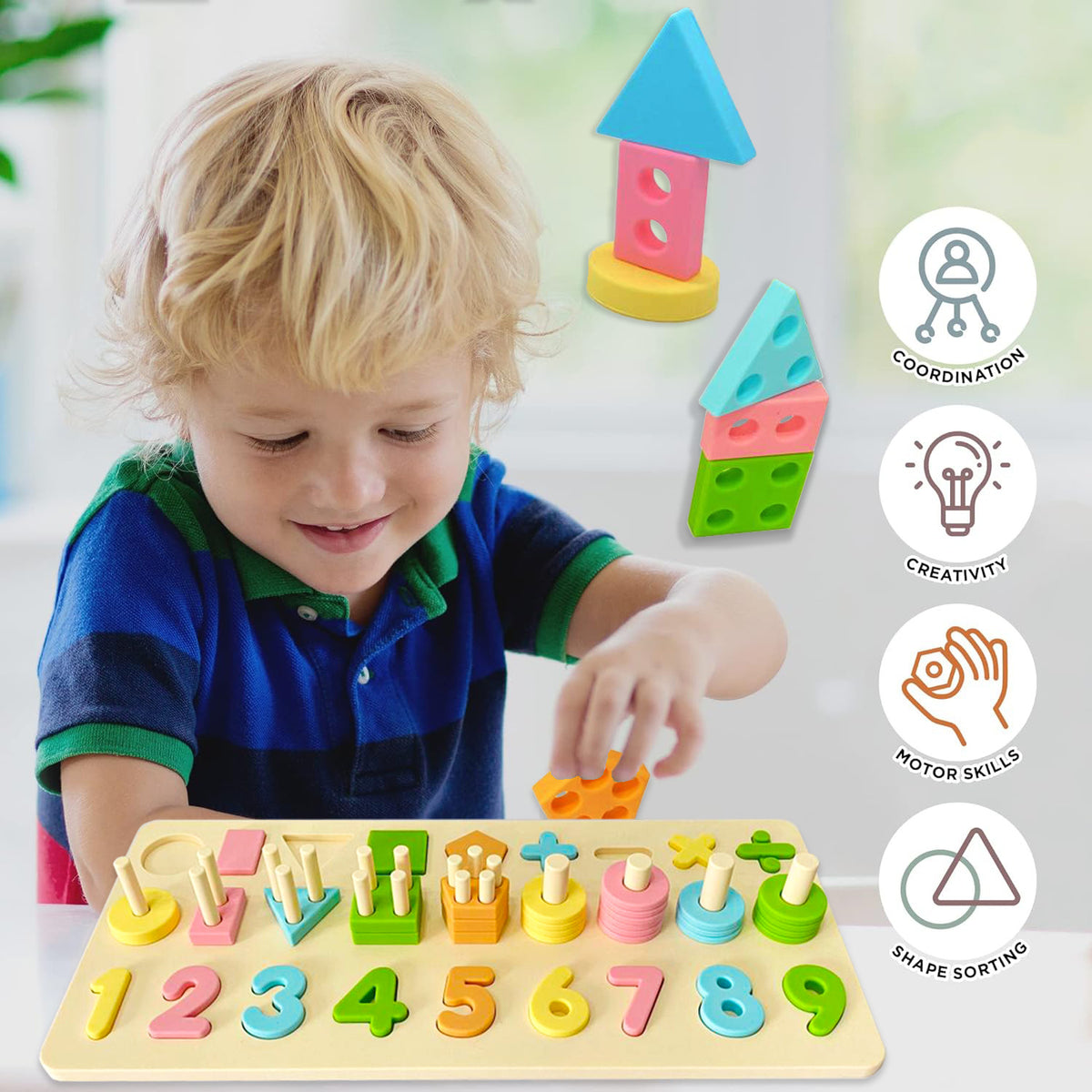
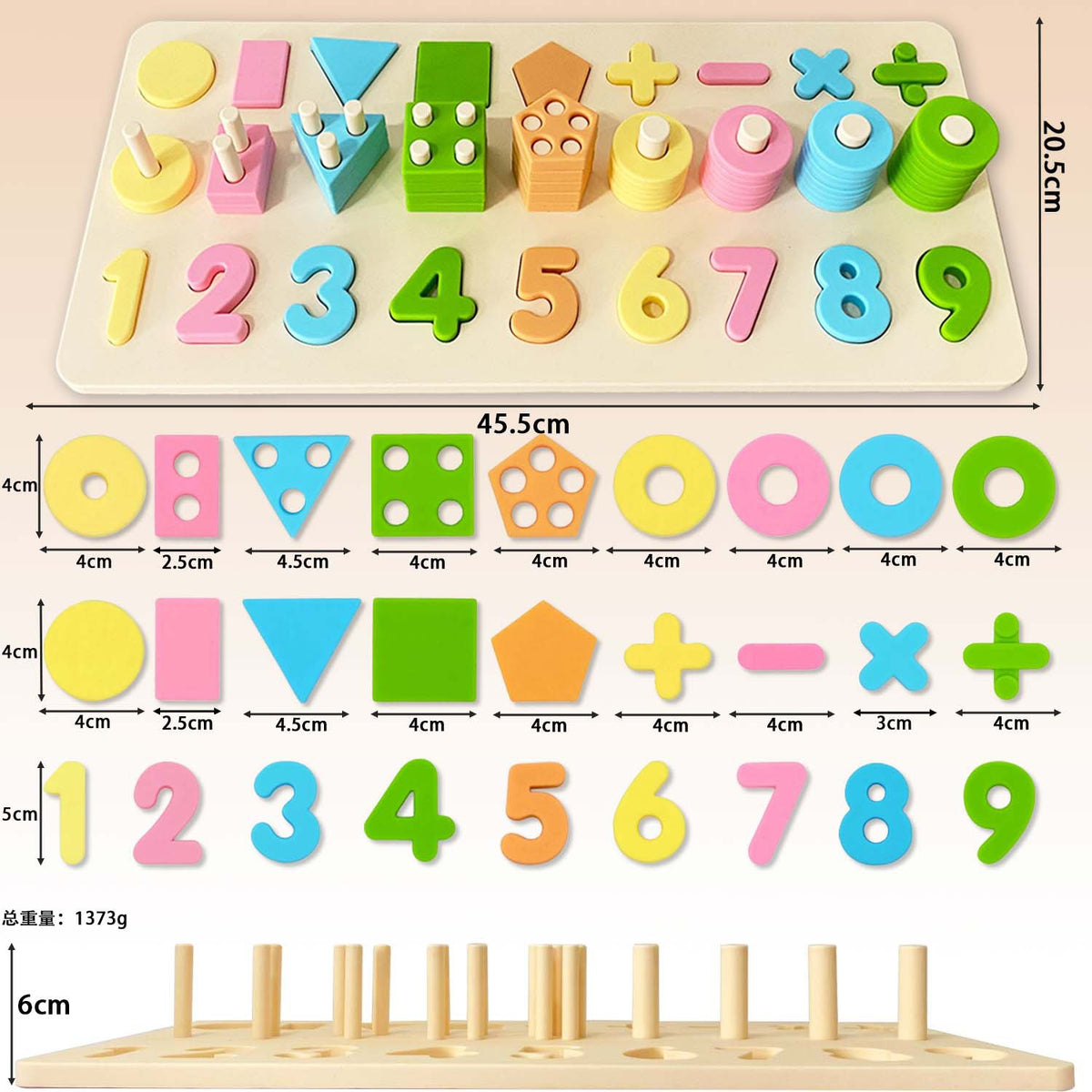
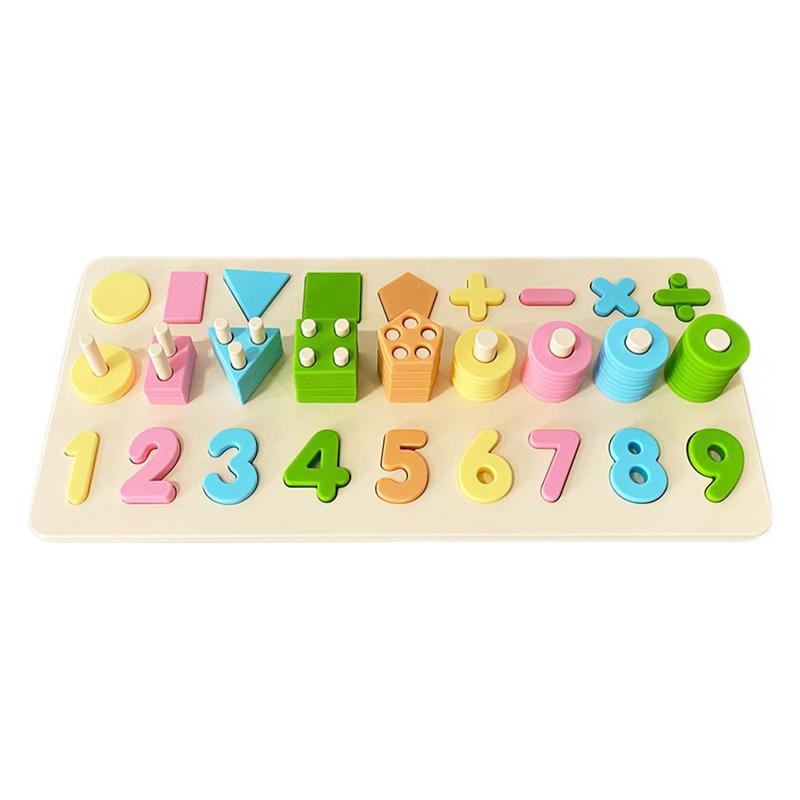
The Kinmilo Wooden Number, Shape & Counting Activity Board brings together numbered wooden pegs, bright numerals, colour recognition and stacking pieces in a single early-learning activity. Children can lift pieces, match them to positions, count aloud and explore what each number represents.
Kinmilo Together Time: A Parent–Child Play Plan
Play Together. Grow Together. Use your Wooden Number, Shape & Counting Activity Board as a starting point for relaxed, child-led interaction. Try one short activity, and follow your child's interests, developmental stage and comfort.
- 1. Connect & demonstrate: Show one number, counter or bead. Model a simple action: “Here is one. Let's add one more.”
- 2. Share the play: Take turns moving or placing a counter while counting together, or simply match a number to a group of objects.
- 3. Grow together: Introduce one small comparison such as “Which has more?” or let the child invent a counting challenge.
Adapt play for ADHD, autism and different learning needs
Start with one to three objects for children who need simpler steps. Use concrete visual groups, gestures and AAC; celebrate attempts rather than speed or correct answers.
Caregiver tip: Children can respond through speech, gestures, pointing, eye gaze or AAC. Support their choices, avoid forcing performance, and celebrate moments of shared play. These are opportunities for learning and connection, not treatment for ADHD, autism or learning disabilities and not a guarantee of a particular outcome. Follow the product-specific age and safety guidance.
Five guided activities for parents and caregivers
- One-to-one counting: begin with numbers 1–3; point to each object while saying one number, then invite the child to move a corresponding piece.
- Colour sorting: place two colours in front of your child, model one match, then offer a turn.
- Shape language: name circles, triangles and squares; accept pointing, signs or AAC as responses.
- Copy a pattern: build a short colour sequence such as red–blue–red and invite the child to continue it.
- Everyday number link: count snacks, steps or toys after playing to reinforce the concept.
How to adapt activities
ADHD / active learners: use one mini-task at a time, give a visual “finish” cue, and let children stand or move between rounds. Autistic children: offer predictable matching patterns and a clear example; welcome non-verbal answers. Developmental delay or intellectual disability: keep only two pieces available, demonstrate again patiently and use hand-under-hand assistance if welcomed. Fine motor: allow a comfortable grasp and focus on placement rather than speed.
Construction & suitability
Wooden activity board with colourful number, shape and stacking elements as pictured. Use on a stable surface under adult supervision, keeping loose parts away from young children who mouth objects. Cleaning: wipe with a lightly damp cloth and dry thoroughly.
Testing documents
Kinmilo identifies CPC and CE testing documentation for this product range.
FAQ
Is it Montessori / Waldorf compatible? Yes, the hands-on counting, practical manipulation and child-led exploration fit Montessori- and Waldorf-inspired play routines.
Can it support a child with autism or ADHD? Parents can break tasks into small steps and adapt sensory and communication demands. This educational activity does not diagnose or treat any condition.
Couldn't load pickup availability