Kinmilo Wooden Pet Vet Doctor Play Set – Puppy Carrier & Veterinary Role Play
Kinmilo Wooden Pet Vet Doctor Play Set – Puppy Carrier & Veterinary Role Play
Care for a Little Friend, One Gentle Step at a Time
Children love caring for someone who needs them. The Kinmilo Pet Vet Doctor Play Set turns that instinct into a welcoming world of make-believe veterinary visits, pet check-ups and family storytelling. With child-sized examination tools, pet-care accessories and portable storage styles, young animal lovers can pretend to listen to a heartbeat, check a temperature, comfort a soft puppy and help a treasured toy pet feel cared for. Designed for shared learning moments at home, in preschool and in supported play sessions.
Kinmilo Together Time: A Parent–Child Play Plan
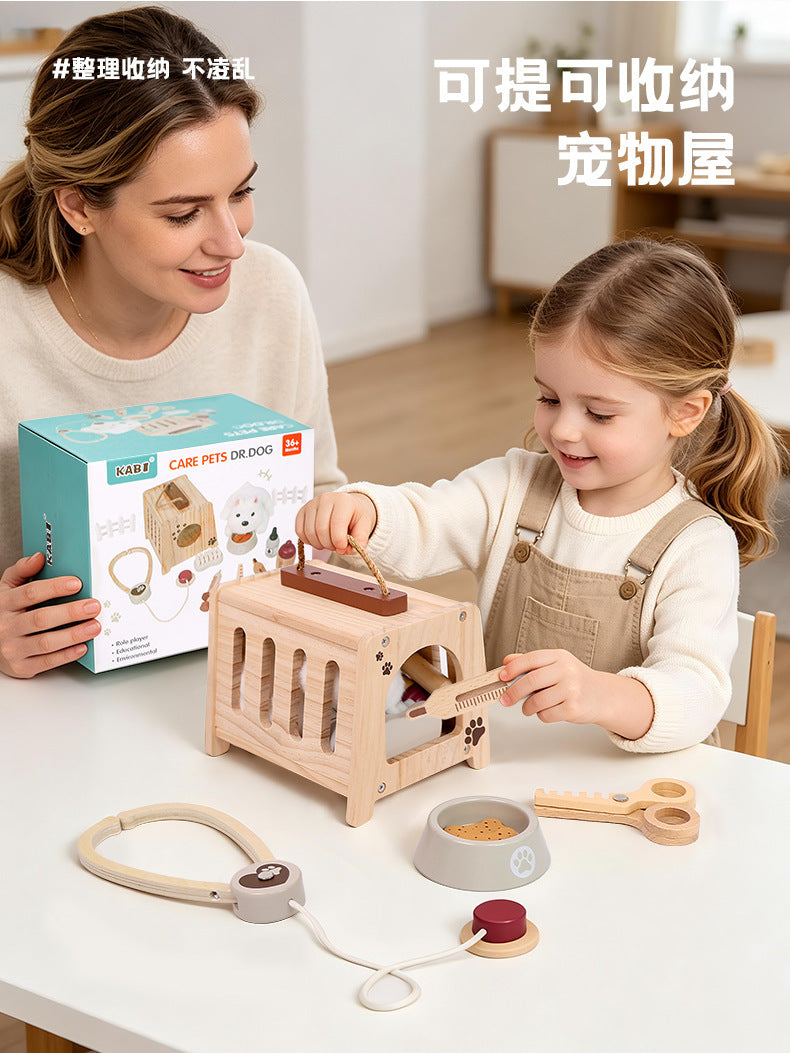
Play Together. Grow Together. Explore Wooden Pet Vet Doctor Play Set as a shared parent–child activity. Begin with one short, enjoyable interaction and follow your child's pace.
- 1. Connect & demonstrate: Introduce one toy patient and invite the child to choose a check-up tool.
- 2. Share the play: Role-play the caregiver and patient taking turns, with 'help' and 'thank you' gestures or words.
- 3. Grow together: Act out hello, check and goodbye, then let the child lead the next check-up.
Inclusive play for ADHD, autism and different developmental or learning needs
Offer picture choices and do not require pretend touch or spoken responses. Children can join through words, actions, pointing, eye gaze, signs or AAC. Offer short rounds, visual prompts and control over breaks as needed.
Caregiver note: Build moments of connection and participation, not a test of speed or correctness. These are educational practice opportunities, not treatments or guarantees of progress. Follow the specific product's age and safety advice, with supervision around detachable parts.
Choose a Veterinary Play Style
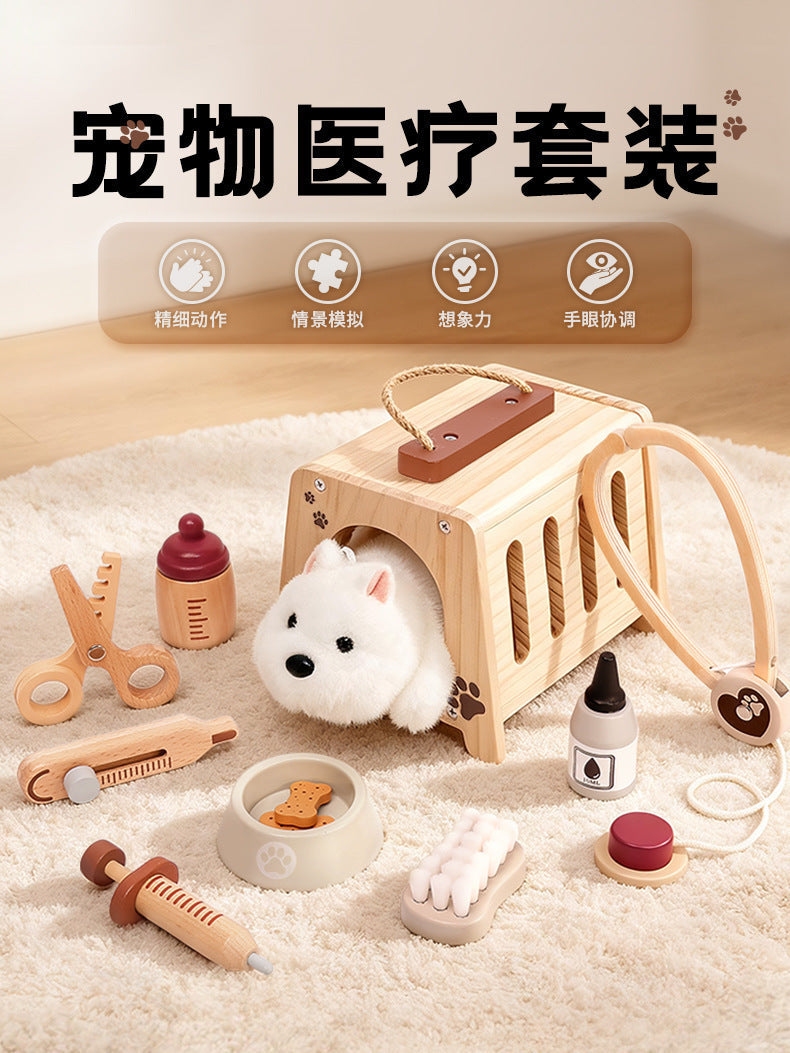
Choose the Wooden Pet Carrier & Plush Puppy Kit for a natural wooden crate and white plush dog, the Blue Pet Vet Backpack Set or Pink Pet Vet Backpack Set for colorful portable medical-themed role play, or the Red First Aid Doctor Bag Set for an expanded medical-bag play scene. These are alternative styles on one product page. Accessories, toy pet colors and storage design vary by selected style; choose the pictured option that best suits your child.
Materials, Finish & Features
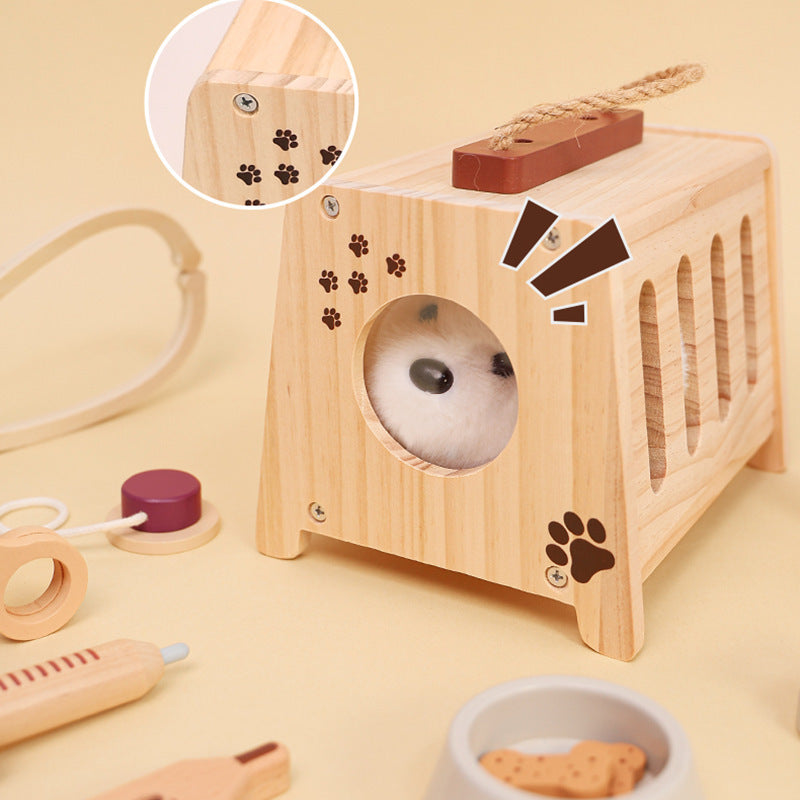
The wooden carrier version combines a natural-finish slatted wooden pet crate with a carry handle, plush toy puppy and child-sized pretend care tools. Play accessories combine wooden handles, painted details, soft fabric components and simulated examination features. The warm wood finish and approachable animal-care theme suit Montessori-inspired practical-life activities and Waldorf-inspired imaginative storytelling. This is a toy for pretend examination only, not working veterinary or medical equipment.
Verified Measurements – Wooden Carrier Version
| Component | Dimensions |
|---|---|
| Assembled wooden pet carrier | 18.5 × 16.4 × 14.5 cm (7.28 × 6.46 × 5.71 in) |
| White plush puppy | Approx. 19.5 cm across × 16 cm high |
| Wooden play stethoscope | Approx. 18.3 cm long; loop span 9.2 cm |
| Wooden play syringe | 10.6 × 3.5 cm |
| Wooden play thermometer | 10.6 × 2.3 cm |
| Wooden play scissors | 10 × 6.7 cm |
| Play medicine bottle | 7.4 × 3.3 cm |
| Play milk / care bottle | 7.7 × 4.4 cm |
| Wooden pet bowl | 7.5 cm wide × 2.6 cm high |
| Mini wooden brush | 7 × 4 × 2.8 cm |
| Retail package | 19 × 15 × 16.3 cm — packaging, not assembled carrier size |
These specifications are for the pictured natural-wood carrier and puppy kit. The blue, pink and red medical-bag styles differ in design and contents; their photos show their configurations separately.
How Parents Can Play Along: A 10-Minute Little Veterinary Clinic
- Welcome the patient (1 minute): introduce the puppy by name and ask, “How do you think our puppy feels today?” Offer simple choices such as happy, nervous or tired.
- Plan a check-up (2 minutes): line up a brush, thermometer and stethoscope. Invite the child to choose which tool to use first. Name and point to each item.
- Listen and communicate (2 minutes): make a pretend heartbeat sound, then let the child repeat, gesture, point or use an AAC board to tell you what they noticed.
- Gentle care (3 minutes): brush the toy puppy, offer pretend water, or let it rest in the crate. Practise a comforting phrase: “You're safe; I'm here to help.”
- Finish and tidy (2 minutes): return each item to its storage place and ask the child to show the puppy its resting spot.
Adapt Activities to Different Learning Needs
For autistic children (ASD)
Keep the appointment predictable with three visual pictures: hello → check → rest. Start with one familiar tool, model an action without demanding eye contact, and allow your child to watch before joining. A toy puppy can offer a gentle way to practise greetings and taking turns at a comfortable pace.
For ADHD and highly active children
Turn the clinic into short movement-based missions: “Bring the brush,” “Carry the puppy to the examination table,” then “Put the stethoscope away.” Give one instruction at a time, use an easy reset between tasks and let your child take the lead when interest is high.
For developmental delay or intellectual disability
Begin with simple two-choice activities, such as brush or bowl. Demonstrate the movement and give time to respond. Repeat an enjoyable routine while slowly offering opportunities for matching, grasping, sequencing and everyday language.
For fine-motor challenges, sensory differences or limited speech
Invite gentle grasp-and-release play with the larger pretend tools and allow pointing, pictures, signs or AAC instead of spoken answers. Offer the soft toy separately if the child prefers a quieter sensory experience. Participation matters more than completing every step.
Learning Through Play
Role play offers opportunities to practise pretend-play vocabulary, turn taking, naming body parts, empathy, basic hand coordination, sequencing and flexible storytelling. Children develop at their own pace; this set is an engaging play resource, not a medical treatment or a developmental assessment tool.
FAQ
Q: Is this a real veterinary set?
A: No. It is a pretend-play toy for caring for stuffed animals; do not use on real pets or people.
Q: Does every style include the wooden crate and puppy?
A: No. The pictured wooden pet carrier is part of its named configuration. The blue, pink and red carry-kit styles have their own storage designs and accessories.
Q: What age range is intended?
A: Recommended for children aged 3+ with adult supervision. Keep small pieces away from younger children.
Q: Could this activity be used by a child with ASD, ADHD or developmental delay?
A: Yes, adults can adjust the length, choice of tools, language and sensory input to create accessible shared pretend-play opportunities.
Q: Is it Montessori or Waldorf inspired?
A: The everyday care routines invite Montessori-inspired practical-life participation, while the open-ended animal stories complement Waldorf-style imaginative play.
Q: How is the toy cleaned?
A: Wipe wooden pieces with a lightly damp cloth and dry promptly. Spot-clean the plush toy according to its sewn care label; do not soak wooden parts.
Q: What safety documentation does Kinmilo provide?
A: Kinmilo maintains CPC and CE testing documentation for its products. Detailed documentation can be requested from Kinmilo customer support.
Couldn't load pickup availability