Little Kitchens, Big Imaginations: Discover the Joy of Everyday Pretend Play
Bring everyday family routines into your child's world with the Kinmilo Mini Wooden Kitchen Appliances & Home Role Play Collection. From making pretend coffee and reheating play food to loading a dishwasher or taking a playful telephone order, this coordinated family of interactive-looking wooden toys invites children to explore familiar household experiences with curiosity and confidence.
Choose one of seven clearly named styles from the selection menu. Every selection is one variant on this product page, not a separate product. The accessory arrangement and dimensions vary by style; please use the specifications below for your chosen appliance. These are pretend-play appliances: they do not heat, cook, brew real drinks or perform real washing.
Choose the Appliance or Play Set That Fits Your Child
| Variant |
Play invitation |
Product size |
Listed weight |
| Wooden Coffee Maker Play Set |
Choose a pretend drink, turn the controls, prepare a cup and serve a friend |
20 × 18.5 × 25 cm |
3 kg |
| Wooden Microwave Oven Play Set |
Open the door, arrange play food, select a pretend setting and announce “ready” |
26 × 17 × 20.5 cm |
2.8 kg |
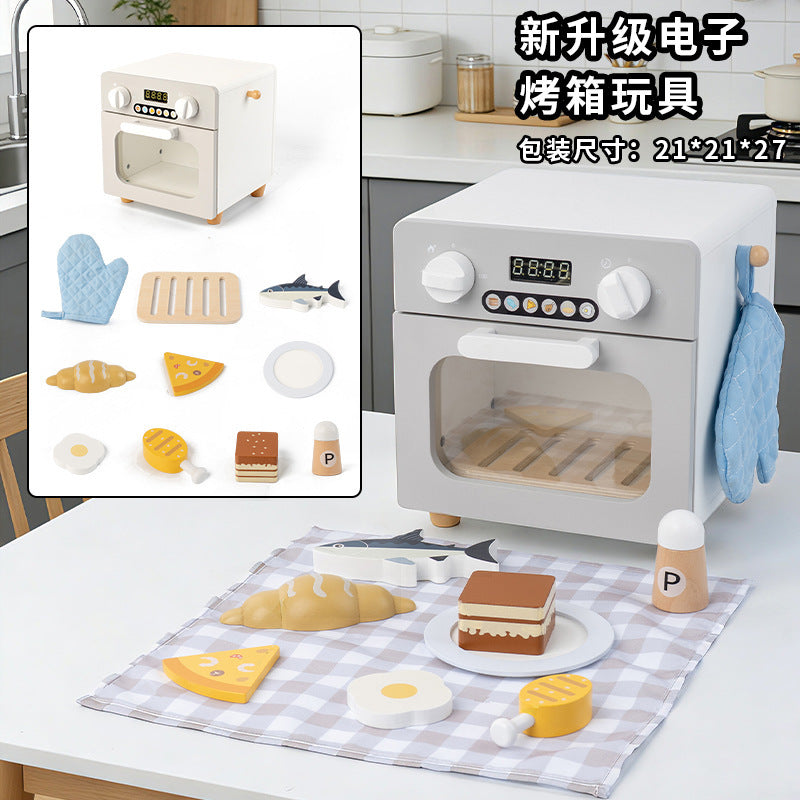
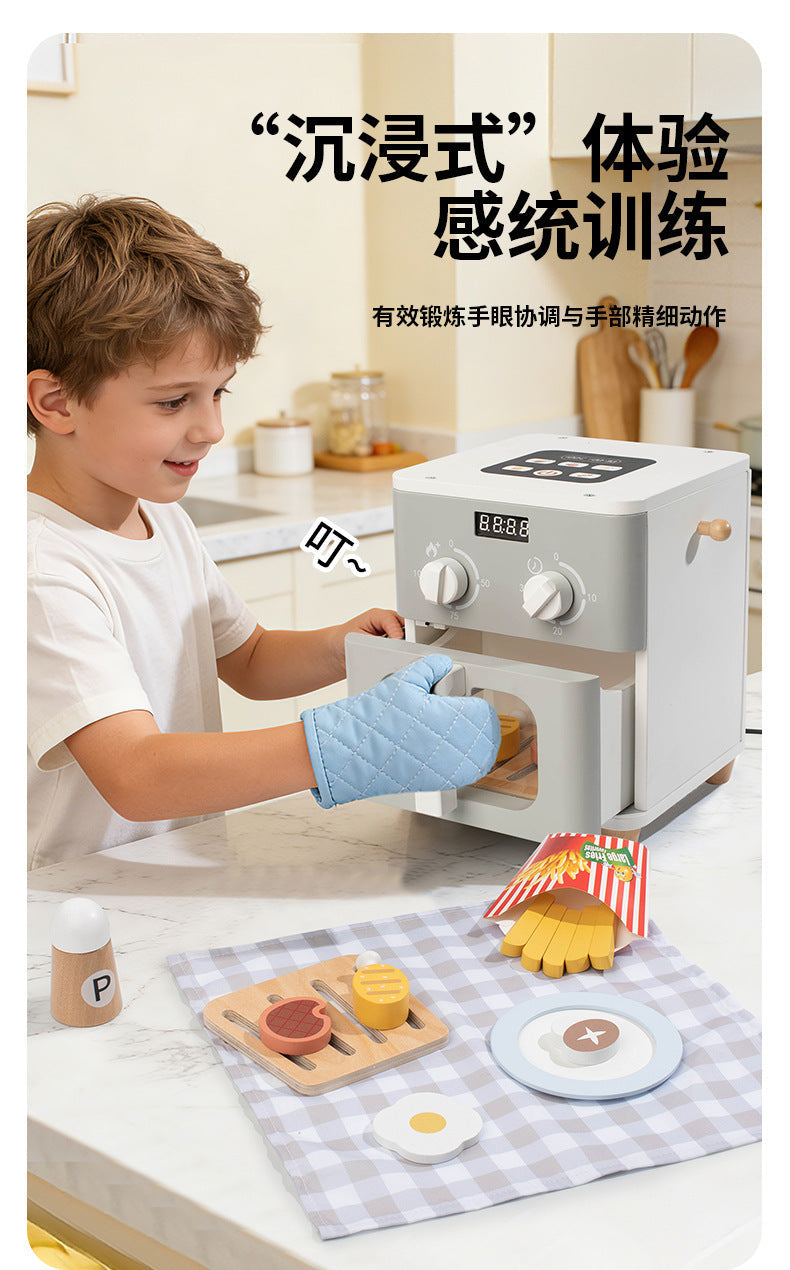
| Wooden Air Fryer Play Set |
Prepare ingredients, place them inside, practise steps and serve a pretend meal |
21 × 22 × 24.5 cm |
3.1 kg |
| Wooden Baking Oven Play Set |
Prepare pretend bread or pizza, arrange the tray and follow a baking-story sequence |
20 × 18.8 × 21.5 cm |
2.6 kg |
| Wooden Grill & Barbecue Station |
Prepare, grill, share and tidy using the larger stand-up pretend cooking station |
51 × 24.5 × 55 cm |
5.5 kg |
| Wooden Pretend Dishwasher |
Load dishes, sort utensils, close the door, “wash” and put them away |
36 × 26 × 52 cm |
6 kg |
| Retro Wooden Play Telephone |
Take pretend orders, greet a friend, ask a question and finish the call |
See the individual style photograph |
Style-specific |
Product sizes above are taken from the corresponding dimensions and style information supplied for the models; packaging carton measurements are separate. For example, a retail or logistics box is not the toy's usable width. Accessories and any control effects depend on the selected variant and are shown in its respective product photos.
Material, Construction & Design
-
Primary material: wood and wood-based components with painted finishes; individual models also use style-specific hardware and imitation controls.
-
Interactive features: model-dependent knobs, opening doors, removable trays, miniature food pieces and decorative displays that make role play feel familiar and inviting.
-
Appearance: calming neutral, cream, white and mint-accented miniature household pieces, with illustrated food and cookware accessories in the relevant sets.
-
Suggested ages: 3 years and older with caregiver supervision, particularly where smaller play-food or utensil components are included.
-
Care: wipe gently with a lightly damp cloth, dry fully and avoid immersing wooden or electrical-style components in water.
How Parents and Carers Can Play Together: Six Guided Activities
1. First, choose the job
Offer two meaningful play choices: “Shall we make coffee or warm a pretend snack?” Show the objects or picture symbols. Let your child point, look, sign, speak or select on an AAC device. Naming their choice naturally makes the activity feel collaborative.
2. Follow a simple “first–then” kitchen routine
Begin with three manageable actions: first choose food, then place it inside, then take it out. Demonstrate slowly with a play-food piece and a small plate. Repeat familiar steps and gradually introduce another action, such as opening or closing the pretend door.
3. Take turns serving
Be the customer while your child is the cook, then change roles if they enjoy it. Use short phrases like “One cup, please,” “Your turn,” “Thank you” and “All finished.” Gesture and nonverbal responses are equally welcome.
4. Practise matching and sequencing
Sort play-food pieces by type or colour. Arrange a simple picture sequence — choose, prepare, serve, tidy. This creates opportunities for visual organization, cause-and-effect understanding and gentle practice with familiar everyday routines.
5. Add an imaginative conversation
Try a cafe, takeaway window, home breakfast or restaurant story. With the toy telephone, practise saying hello, making a choice, asking for help and ending a call. For AAC users, model “hello,” “more,” “help,” “eat,” “drink” and “finished” with the child's existing communication system.
6. Make tidying part of play
Put utensils and pretend food away together. Use a short, predictable tidy-up song or a picture cue. Everyday activity practice does not need a perfect outcome: choosing a plate or returning one spoon can be a meaningful contribution.
Inclusive Activity Ideas for Different Learning Needs
For ADHD and children who need frequent movement
Use short, active missions such as “Pick a cup, turn the knob, serve it, stretch.” Keep the play surface clear and offer a movement break whenever helpful. Give an immediate two-choice next step instead of a long set of directions.
For autistic children (ASD)
Start with a familiar household routine or an appliance your child enjoys. Demonstrate the sequence, use visual pictures if useful and keep sound or sensory surprises predictable. The child can choose to repeat a favourite action, explore quietly or watch before participating.
For developmental delay or intellectual disabilities
Break each role-play sequence into small actions: reach for an item, lift it, place it on a tray, close the door and serve. Offer additional response time, repeat the same steps across sessions and celebrate each opportunity to take part.
For physical disabilities or fine-motor differences
Bring the selected appliance and accessories within a comfortable reach on a stable surface. A caregiver can hold or position larger components while the child chooses, points, gestures or operates an easy-to-reach control. Adapt the activity to the child's movement range and preferences.
For AAC and emerging communication
Build real opportunities to request “more,” “open,” “close,” “help,” “hot,” “cold,” “my turn” or “finished.” Model those words using gesture, pictures or an AAC device rather than demanding repetition. Let the child's choices lead the activity.
Frequently Asked Questions
Can my child use these toys as Montessori-inspired learning materials?
Yes. The familiar practical-life routines, opportunities for choice-making and hands-on exploration support Montessori-inspired child-led activity. Open-ended imaginary kitchen stories can also complement Waldorf-inspired pretend play.
Are the appliances real kitchen equipment?
No. Every selection is a child's pretend-play toy. They do not cook, heat, microwave, brew drinks or wash dishes.
Does every variant include the same accessories?
No. The accessories shown in the gallery depend on the appliance style selected. The coffee maker, oven, microwave, air fryer, grill, dishwasher and telephone each have their own illustrated contents and configuration.
Which one is best for practising daily routines?
The dishwasher supports playful loading, sorting and putting away; the microwave and oven invite simple first–then sequencing; the coffee machine and telephone are especially useful for requesting, turn-taking and social-role stories. Choose based on the child's interests.
Can children with ADHD, autism or developmental delays enjoy these sets?
Caregivers can adapt the duration, number of accessories, pace and communication method for an inclusive activity. The toys provide opportunities to practise participation, coordination and everyday communication, rather than a medical treatment or a guaranteed developmental result.
How do I clean and store the set?
Wipe with a barely damp cloth and dry promptly. Avoid soaking wood, controls and decorative electronics-style parts. Store miniature pieces together away from younger children.
Is safety documentation available?
Kinmilo maintains CPC and CE testing documentation for its children's toy range, available upon request. Observe the age marking, warnings and adult supervision guidance on the product and packaging.