Montessori Wooden Shape Stacking & Sorting Toys | 7 Geometric & Pattern Designs
Montessori Wooden Shape Stacking & Sorting Toys | 7 Geometric & Pattern Designs
Explore shapes, colors and patterns together
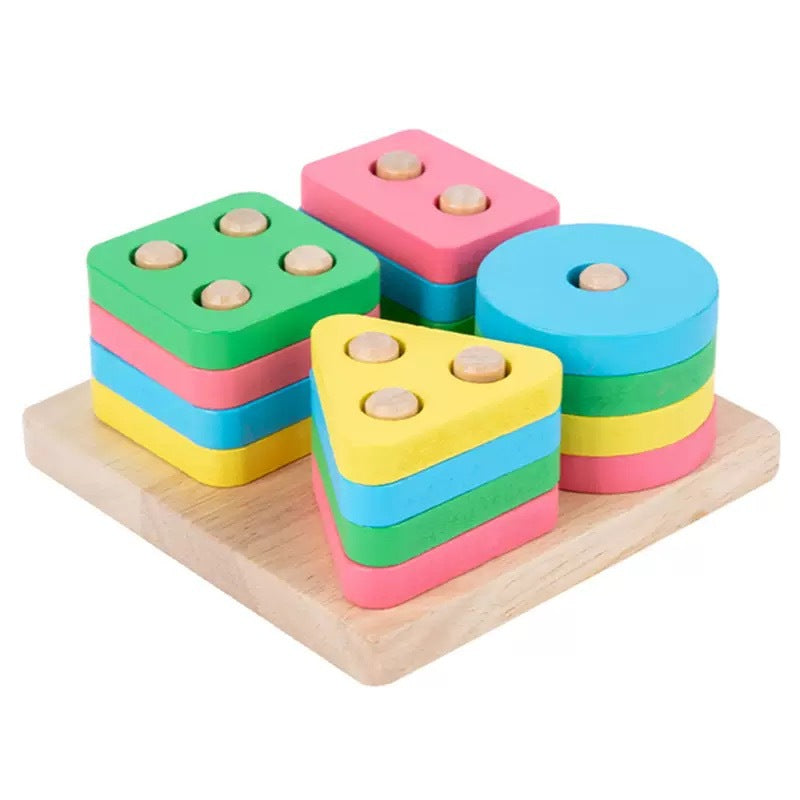
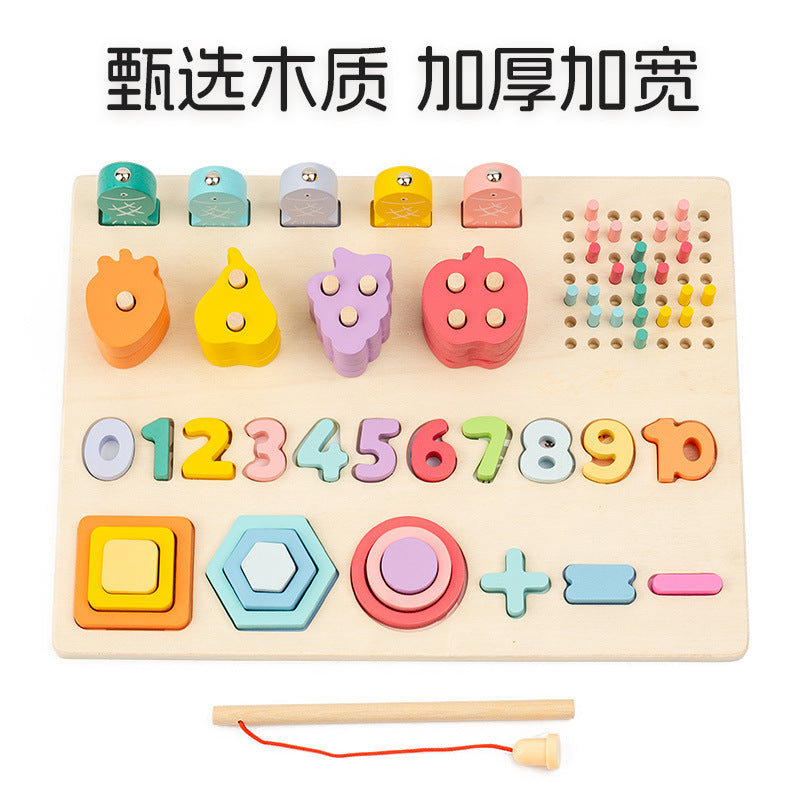
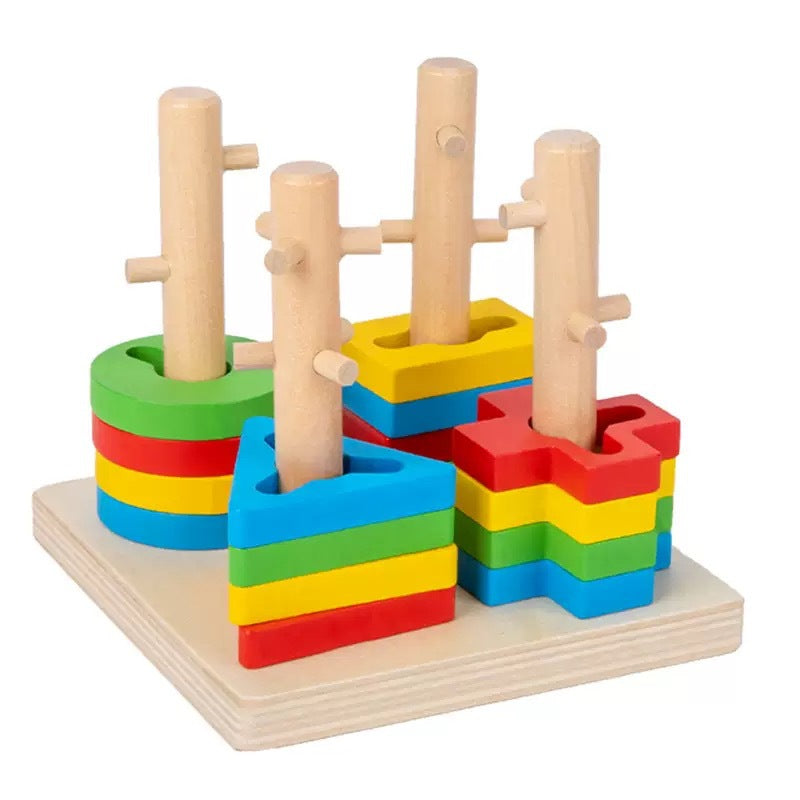
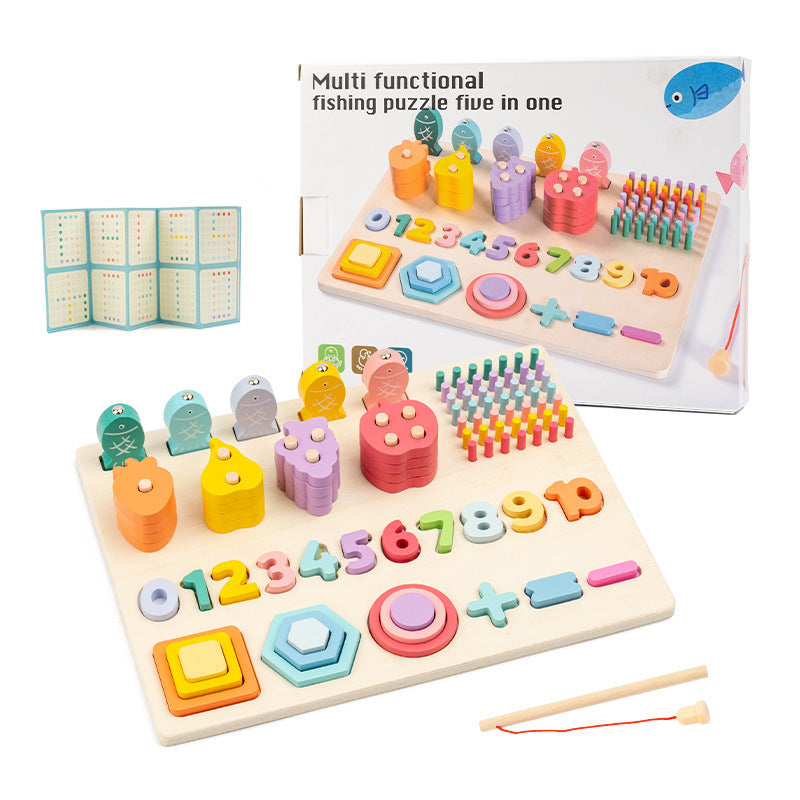
The Kinmilo Wooden Shape Stacking & Sorting Collection brings several hands-on designs together in one carefully organized product listing. Select a design from the Design menu to match your child's interests: build towers, fit chunky shapes onto pegs, arrange colorful flower pieces or experiment with pretend-play fishing and stacking. Each design is a different physical set with its own contents and dimensions.
Choose your design: sizes and activities
| Design | Product dimensions / details | Main play invitation |
|---|---|---|
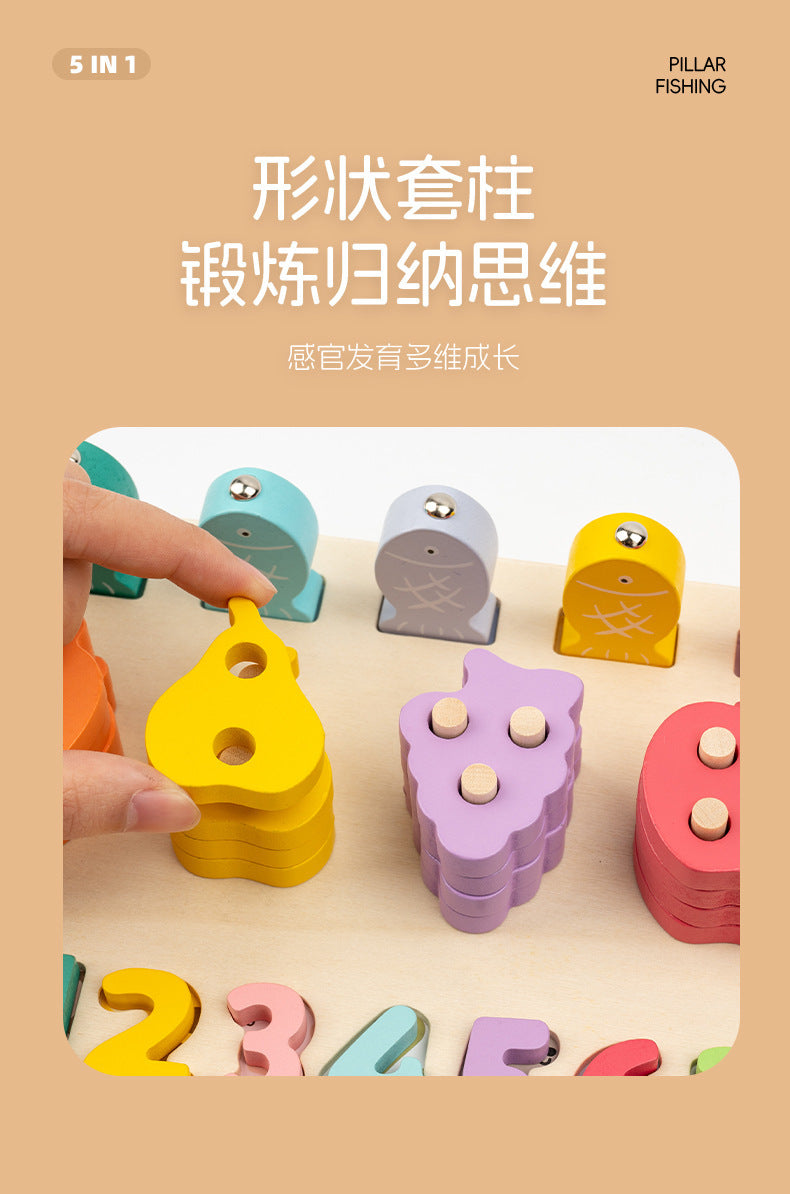
| Flower Shape Matching Board | Product: 19.5 × 13 × 3.2 cm; approx. 0.16 kg | Fit colorful flower-shaped pieces, compare outlines and copy patterns |
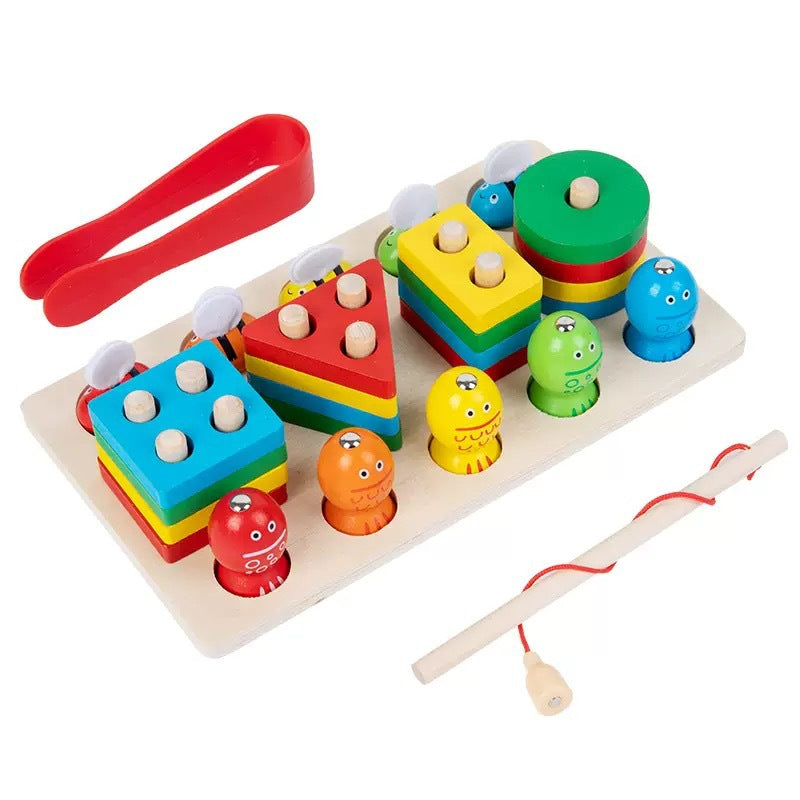
| Beehive Fishing & Shape Stacker | Approx. 0.42 kg; dimensions depend on the selected board design | Stack colored shapes, move pieces with a simple fishing activity and match colors |
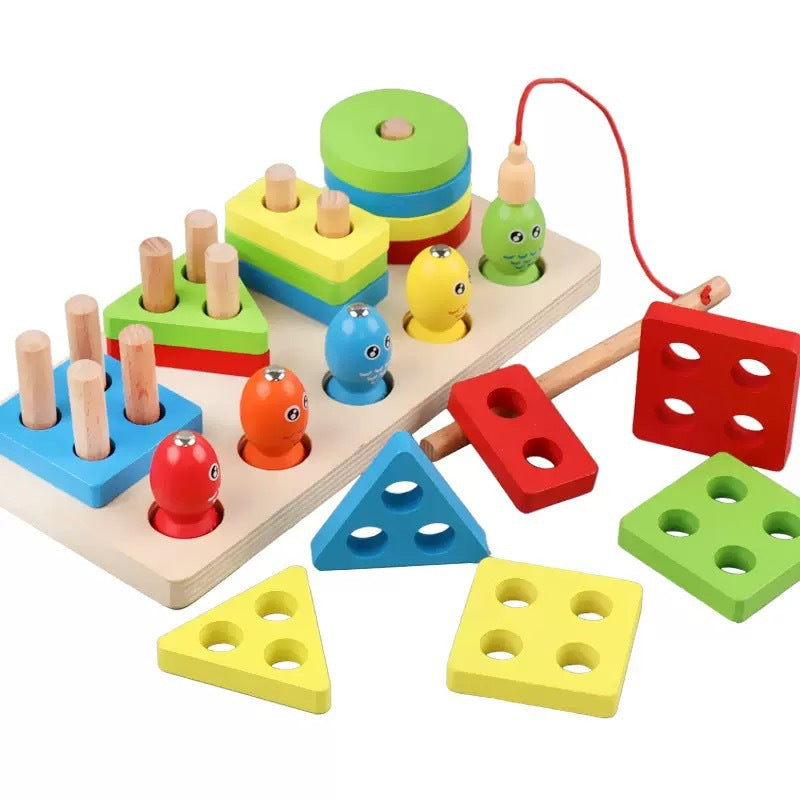
| 2-in-1 Peg & Shape Stacker | Approx. 0.29 kg | Practise peg placement, color grouping and geometric matching |
| 3D Geometric Tower Stacker | Product: 13.5 × 13.5 × 12 cm; approx. 0.47 kg | Build a vertical geometric tower and compare different profiles |
| Square Four-Column Sorter | Product: 12 × 12 × 5.5 cm; approx. 0.34 kg | Sort shapes across four grouped columns on a compact base |
| Rectangular Four-Column Sorter | Product: 24 × 6 × 5.5 cm; approx. 0.34 kg | Sort, stack and sequence four colors and shapes in a row |
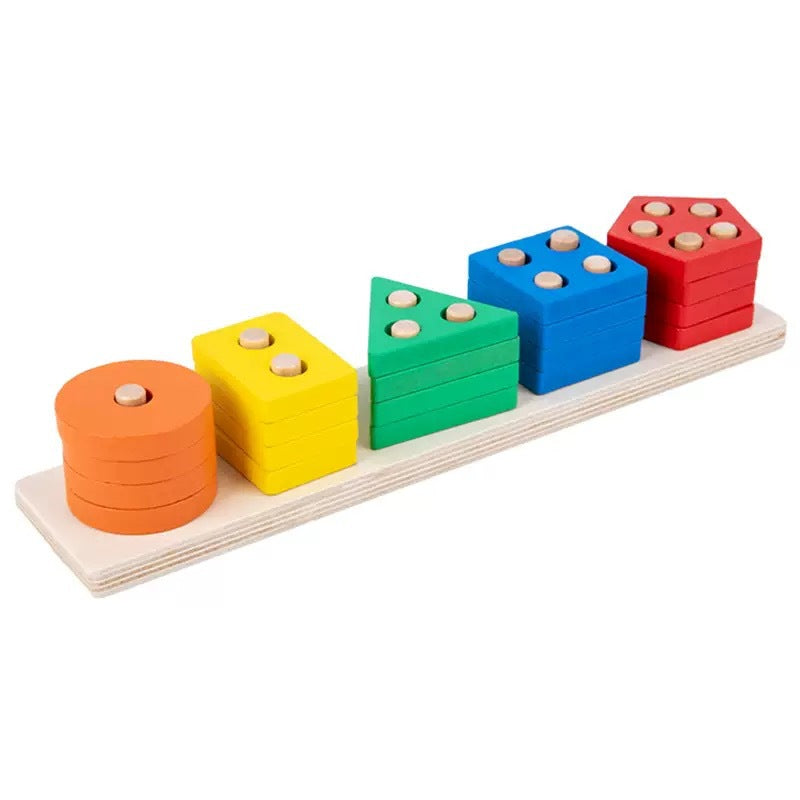
| Rectangular Five-Column Sorter | Product: 30 × 6.2 × 5.5 cm; approx. 0.53 kg | Extend color sequences across five columns for a longer sorting challenge |
Important size note: these are individual item measurements where stated, not bulk shipping-carton dimensions. Package sizes and accessory counts vary between designs. Product photographs show the different sets.
What children can practise through play
Stacking one shape at a time offers chances to explore grasping, controlled release, bilateral coordination, spatial language, visual matching, early sequencing and experimentation. A child may begin by enjoying the movement of putting a single piece onto a post, then become interested in choosing between shapes, making simple patterns or inventing stories. Every small discovery is an opportunity to connect with a parent, caregiver or teacher.
A hands-on guide for parents and caregivers
Activity 1: Match one shape
Choose one piece and point to its matching outline or peg. Say “Round piece,” then model placing it. Let the child try with their preferred hand or with a comfortable amount of support. Begin with a single success before adding more choices.
Activity 2: Color hunt
Place red and blue shapes nearby. Invite “Find red,” or show a red reference piece without requiring speech. For children who use pictures or AAC, offer color symbols as an alternative way to answer.
Activity 3: Build a tiny tower
Start with two pieces. Put on one piece, pause and offer the next one. Take turns to practise shared attention, waiting and an enjoyable back-and-forth routine. Count the pieces together when the child is interested.
Activity 4: Copy the pattern
Arrange a two-color sequence such as yellow–green. Encourage the child to build their own matching line. Later, try yellow–green–yellow or use a matching picture card if included in the chosen design.
Activity 5: Invent a story
Use colorful shapes as pretend flowers, houses, stepping stones or characters. Ask open-ended questions: “Where should this one go?” or “What happens next?” There is no single correct way to make a story.
Adapting play for autistic, ADHD and developmentally delayed learners
- Autism / ASD: begin with a consistent start-and-finish routine, allow the child to explore texture and shape at their own pace and keep visual choices simple.
- ADHD or high activity levels: use short matching challenges, let the child stand or move between rounds, and alternate seated stacking with collecting shapes from nearby spots.
- Developmental delay or intellectual disabilities: reduce the number of pieces, model one action at a time and give plenty of processing time. Repetition and a calm pace often make an activity more accessible.
- Limited speech / AAC: accept a point, reach, eye gaze, picture or communication-device response. Adults can narrate the action without insisting on a verbal answer.
- Fine-motor differences: stabilize the base, choose larger easy-grip pieces first and use hand-under-hand guidance when welcomed; stop if the child shows discomfort or fatigue.
These examples offer inclusive opportunities for skill practice and positive shared play; the toy is not a medical treatment or a substitute for individualized professional advice.
Materials, care and safety
Wooden boards and stacking components with colorful painted or printed finishes. Smooth and dry with a soft cloth after play; use a lightly damp cloth for surface cleaning and dry immediately. Keep away from prolonged water exposure. Set contents vary by design.
Age guidance: for adult-supervised preschool activities, generally age 3+. Small parts and pegs may present a choking hazard. Fishing accessories and cords on selected sets require direct supervision. Keep loose components away from children who mouth objects, and inspect parts regularly.
Safety testing documentation: CPC and CE test-report documentation is available for this range; Kinmilo can supply the applicable product documentation on request.
Frequently asked questions
Which design is best for beginners?
The compact four-column sorter provides a clear introduction to selecting and placing shapes. The flower board offers an inset matching invitation; the five-column design adds a longer sequencing task. Follow the learner's interests and access needs.
Is it suitable for children with autism or ADHD?
The hands-on activities can be adapted for many learning styles. Offer predictable steps, brief sessions, movement breaks and choices; there is no requirement to complete an entire board.
How do I help a child with developmental delay participate?
Begin with one piece, demonstrate slowly, invite a gesture or reach and allow extra time. Shared attention and comfortable participation matter more than the number of correct matches.
Does it support Montessori or Waldorf play?
Shape classification, practical hands-on repetition and child-led exploration align with Montessori-inspired activities, while open-ended imaginative construction can complement Waldorf-inspired home play. The set is not represented as officially endorsed by either organization.
Are all seven designs included in one purchase?
No. Select one design in the variant menu. Each option is an individual set; images illustrate the different available designs.
How are dimensions measured?
Individual product dimensions are identified separately from shipping-carton measurements. This matters especially for the taller 3D stacker and the long four- or five-column boards.
Couldn't load pickup availability