Wooden Animal & Transport Matching Puzzle Boards | 4 Themes
Wooden Animal & Transport Matching Puzzle Boards | 4 Themes
Discover Animals, Habitats & Everyday Transport Through Hands-On Matching
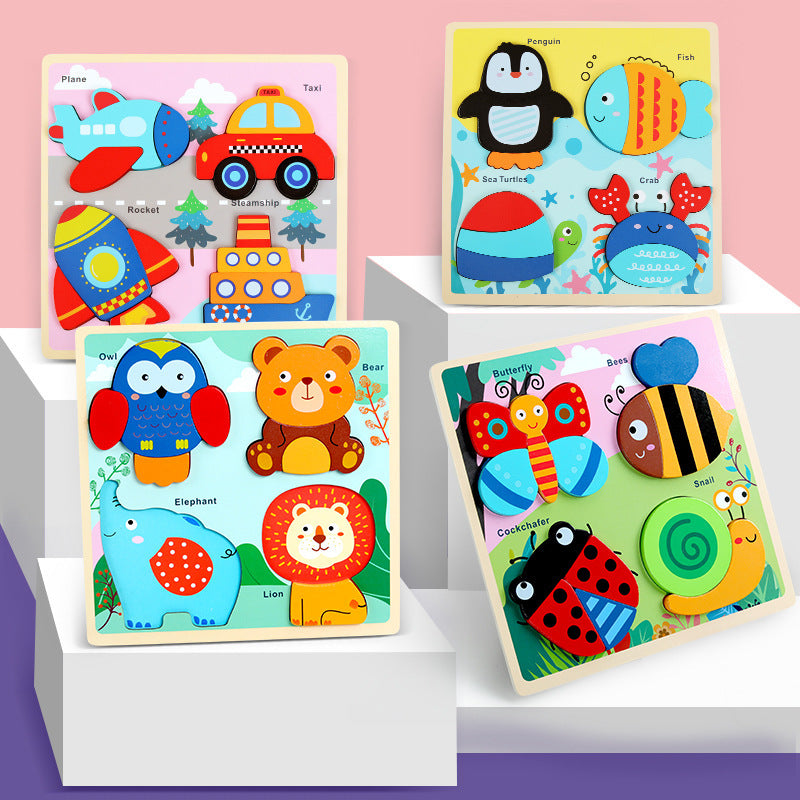
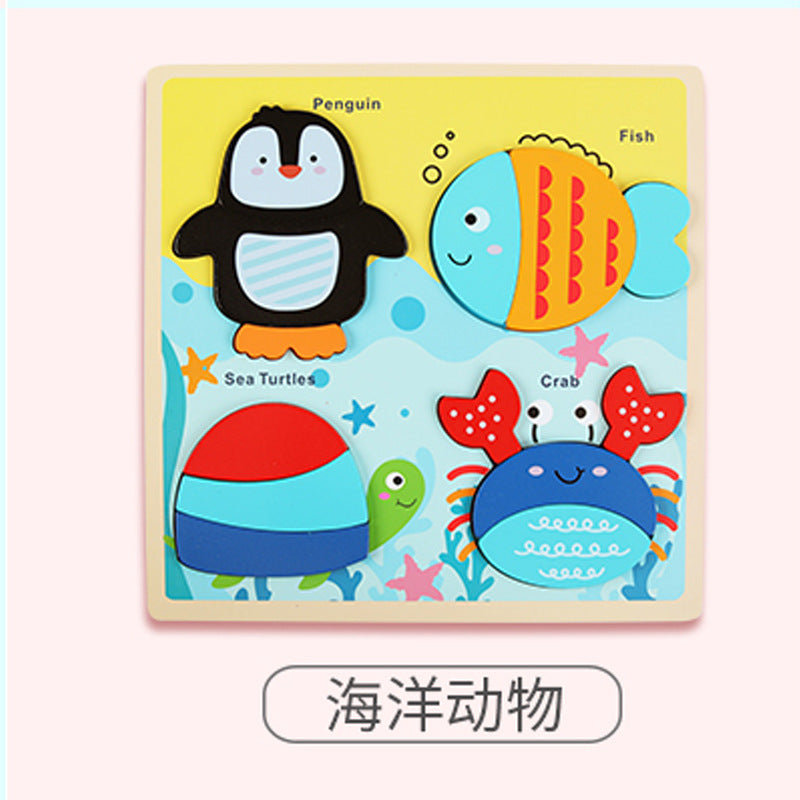
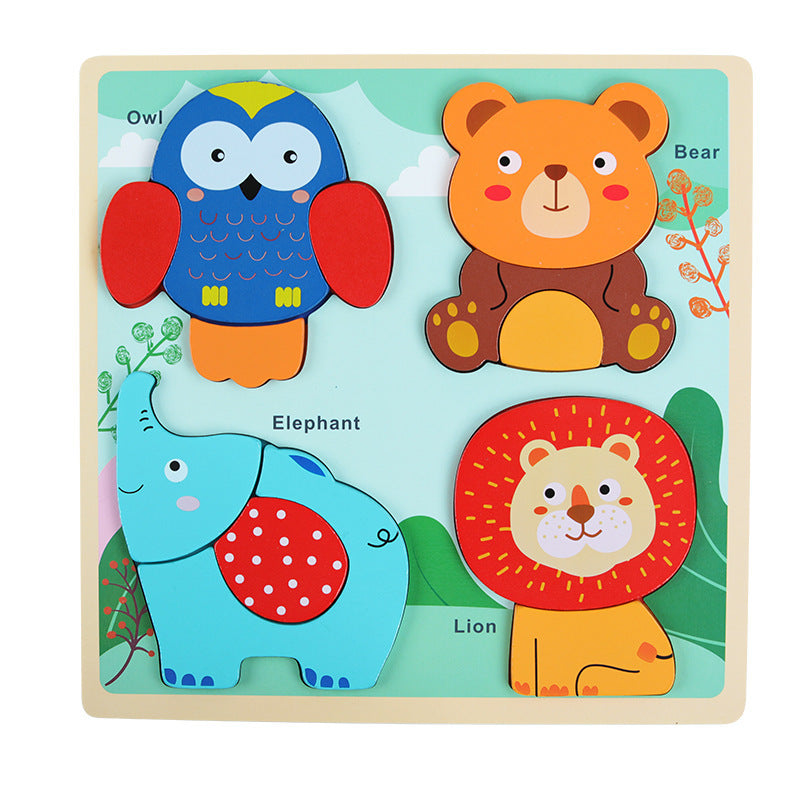
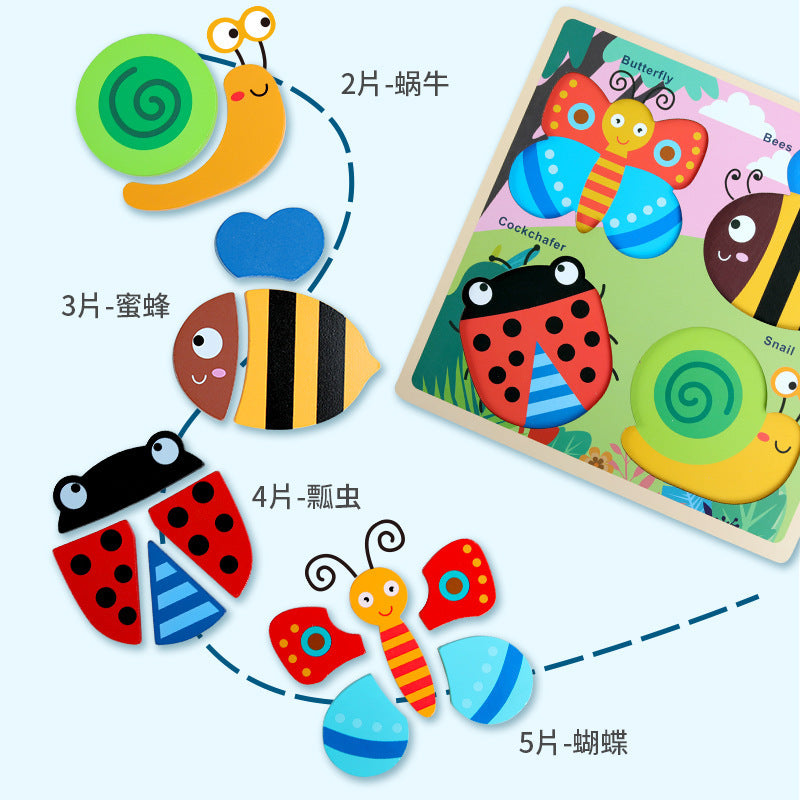
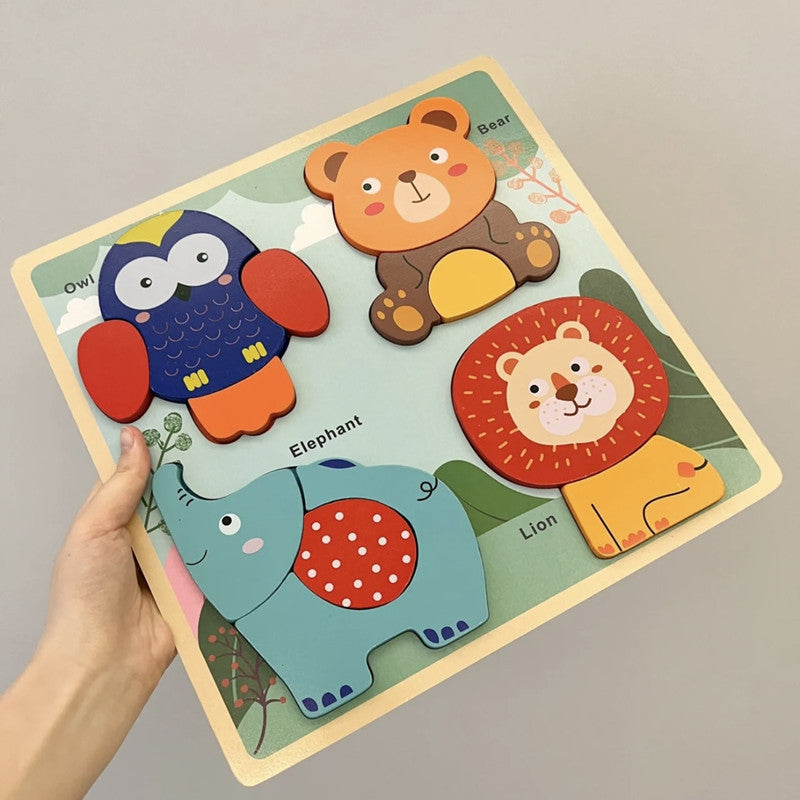
Kinmilo's Montessori-Inspired Wooden Theme Matching Puzzle transforms a simple lift-and-place game into an opportunity for language, observation and hand-eye coordination. Bright illustrated pieces sit inside a corresponding wooden board, giving young learners a tangible way to explore familiar animals, sea creatures, insects or vehicles. Different pictured theme designs allow families and educators to choose a subject that sparks the learner's curiosity.
Dimensions & Storage
Illustrated retail presentation box: 30 × 30 × 3 cm (approximately 11.8 × 11.8 × 1.2 inches), measured from the animal puzzle assortment's packaging image. This is the box measurement, not a claim that each individual themed puzzle board is 30 cm wide. The product comes in the selected Safari Animals, Ocean Animals, Insects or Transportation design.
Why Families Use Matching Puzzles
- Fine motor practice: lift, turn, align and place shaped wooden pieces.
- Visual discrimination: compare outlines, colors and picture details.
- Vocabulary building: name animals, habitats, vehicles, colors and simple actions.
- Cause-and-effect understanding: explore how each piece fits its matching space.
- Confidence through repetition: repeat a familiar puzzle without time pressure.
Choose Your Theme
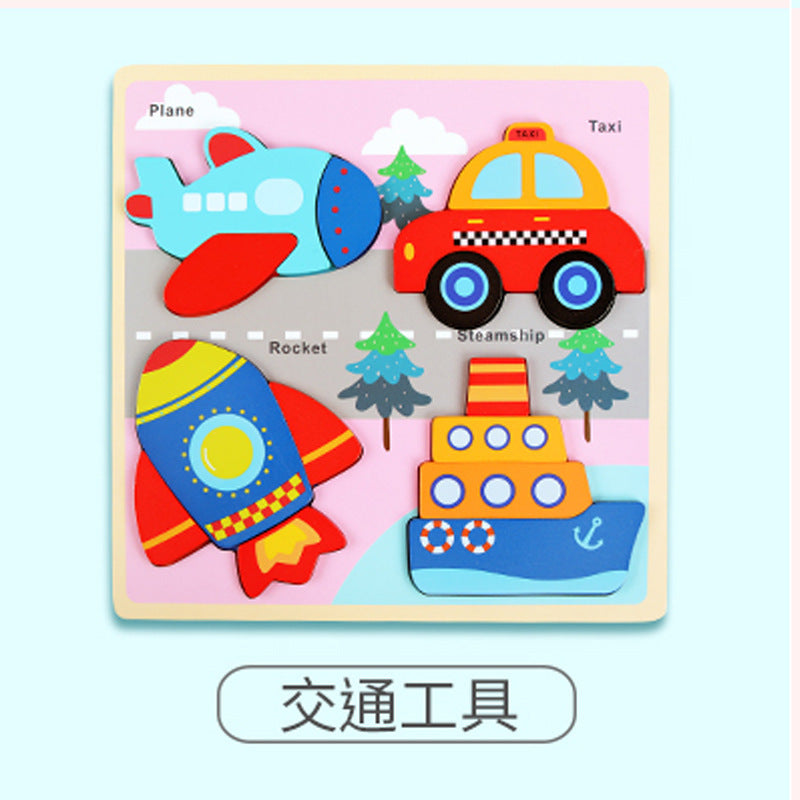
Choose one of four wooden matching-puzzle themes: Safari Animals, Ocean Animals, Insects or Transportation. Each purchase includes the theme selected at checkout. The themed board provides familiar pictures and matching spaces for hands-on exploration.
Parent & Educator Play Guide
1. Two-Piece Success
Begin with just two noticeably different pieces. Point to a matching silhouette and model one placement. Offer verbal cues, gestures or hand-under-hand assistance if the child welcomes it.
2. Name, Point and Find
Ask “Where is the lion?” or “Can you find the fish?” Give extra processing time. If the learner does not use speech, pointing, showing or choosing between two pieces is also a meaningful way to participate.
3. Describe a Story
Encourage pretend conversations: “The bus is going to school” or “The turtle swims in the ocean.” Invite the child to add a sound, gesture or word. Follow their imaginative ideas rather than correcting every detail.
4. Make a Matching Routine
Use a short “first choose, then match, then tidy” routine. Offer a movement break when needed. Increase difficulty by mixing three or four pieces only after the learner shows interest.
Inclusive, Individualized Activities
Use these wooden matching boards for preschool discovery, Montessori-inspired learning and short family activities. Start with two pieces and add more as the learner becomes comfortable. For children with autism, ADHD or communication differences, support participation with pointing, gestures, picture prompts and predictable turn-taking.
Care & Safety
Supervise all play and inspect puzzle pieces regularly. Keep removable small pieces away from children who mouth objects or are at risk of swallowing them. Clean with a soft, lightly damp cloth and let the wood dry fully; do not soak.
Real-Life Play Scenarios for Parents and Educators
What is an easy animal matching game for a preschooler?
Choose the Safari Animals, Ocean Animals or Insects board, set out two pieces and show one matching outline. Name the pictures together and allow the child to replace each piece in their own time. Introduce more shapes after the first matches feel familiar.
How can I teach transportation words with a wooden matching puzzle?
Select the Transportation theme and turn matching into a conversation about everyday journeys. Ask “Which vehicle goes on the road?” or “How would we visit a friend?” Invite the child to point, place pieces or invent a short trip.
Can I use a wooden matching board with a learner who prefers predictable routines?
Yes. Keep the board in the same place, present only a small number of pieces and follow a simple choose-match-tidy sequence. Offer breaks and participation through gestures or AAC. This format gives caregivers a clear way to adjust the challenge.
Frequently Asked Questions
Is this toy inspired by Montessori or Waldorf education?
This inset wooden puzzle is strongly Montessori-inspired in its tactile matching, visual comparison and self-paced repetition. Waldorf-inspired storytelling can be added after matching—for example, inventing a story about an ocean animal or vehicle—but the board itself is a structured matching activity rather than an open-ended Waldorf toy.
How can I use this toy in a short daily learning session?
Start with one theme and two wooden pieces, model a single match and invite the learner to take the next turn. Name the pictures or let the child point without requiring speech.
Are all puzzle themes included?
No. Please select your preferred theme; images illustrate the range of available designs.
What if the child is new to puzzles?
Offer two pieces and demonstrate just one action at a time. Success means participating with support, not finishing quickly.
Can a non-speaking learner use it?
Yes, activities can use pointing, gestures or choosing between pieces instead of spoken answers.
Is it suitable for children with ASD or ADHD?
Yes. These boards offer clear visual matching and hands-on placement activities. Adjust the number of pieces, background distractions and session length to suit each learner; this is a learning toy rather than a medical treatment.
Can educators use it in small groups?
Yes. Ask each learner to choose, name, match or describe one piece, with individualized help as appropriate.
Does the set contain magnets?
This is a wooden inset-matching puzzle. Children place the illustrated pieces into the corresponding shapes on the board.
Couldn't load pickup availability