Wooden City, Zoo & Amusement Park Building Blocks Learning Set | Kinmilo
Wooden City, Zoo & Amusement Park Building Blocks Learning Set | Kinmilo
Build a city. Visit the zoo. Create a new story every day.
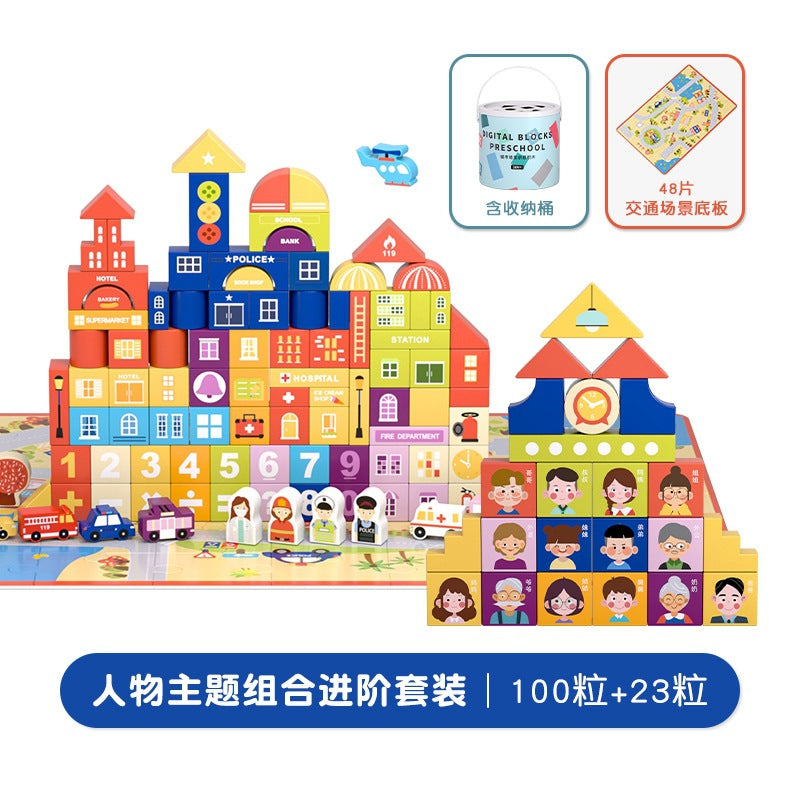
Bring together construction, animal discovery and small-world storytelling with Kinmilo's Wooden City, Zoo & Amusement Park Building Blocks Learning Set. Illustrated building pieces, colorful number elements, animal scenes and themed accessories allow families and educators to create an inviting imaginary world. Children can try their own layouts, recreate a favorite scene or collaborate on a new adventure.
Wooden Block Dimensions
This miniature city and themed-building set uses modular wooden construction pieces. The illustrated reference sizes are:
- Standard square block: 3 × 3 × 3 cm (approximately 1.18 × 1.18 × 1.18 inches).
- Tall rectangular block: 3 × 3 × 6 cm (approximately 1.18 × 1.18 × 2.36 inches).
- Wide arch and triangular roof pieces: approximately 6 × 3 × 3 cm (2.36 × 1.18 × 1.18 inches).
- Selected rounded and roof-profile blocks: approximately 3 × 3 cm across, with profile dimensions varying by shape.
These are individual block measurements rather than the overall dimensions of a completed town; the assembled layout depends on how you arrange the pieces.
What children can explore
- City and community play: recognize buildings and talk about places people visit.
- Zoo and animal storytelling: name or sort animal characters, create pretend enclosures and discuss habitats in an age-appropriate way.
- Number and color recognition: identify printed numbers and compare bright colors as part of natural play.
- Creative block construction: stack geometric shapes and discover ways to balance and support a building.
- Maps and themed scenes: arrange structures and accessories across the illustrated play area shown in the photographs.
Explore city, zoo and amusement-park scenes through the colorful building pieces and themed illustrations featured in the gallery. Combine buildings, animals and other play elements to create a new setting for each storytelling session.
Step-by-step parent activity guide
Activity 1 — Three-piece building challenge
Choose two rectangular blocks and one roof. Model a tiny house, dismantle it, then invite your child to build their own. Describe choices rather than correct errors immediately.
Activity 2 — Take a trip around town
Choose a destination such as the zoo, school or park. Move a pretend visitor along a route and practise language like first, next and last.
Activity 3 — Animal sorting conversation
Place the animal-themed pieces on the mat. Ask “Which one would you like to meet?” or “Can you find the giraffe?” Offer pointing and picture choices for nonverbal participation.
Activity 4 — Count as you build
Count one block at a time while making a wall. Then compare a tower of two blocks and a tower of three. Keep it light and playful.
Activity 5 — Build and tell a story together
Invite an adult, sibling or classmate to take turns adding one piece to a shared scene. Each person contributes one small idea; an unfinished city is still a successful play session.
Helpful for families and education settings
The building and pretend-play format brings construction, sorting, early counting and storytelling together. Children can handle blocks, describe locations, build scenes and take turns creating a shared story. Introduce a few pieces at a time and expand the activity to match each learner's interest.
Caregiver & educator guidance
Introduce one simple action, demonstrate it slowly and invite the learner to try. Keep the number of pieces manageable, follow the learner's interests and return to favorite activities for familiar, enjoyable practice. Use clear language, offer choices and celebrate participation at each stage.
For different learning needs
Use this learning set for flexible, caregiver-led play. Present one activity at a time for learners who prefer structure, or introduce storytelling and extra challenges for those who enjoy variety. Each session creates opportunities to practice attention to a task, fine-motor coordination, communication and independent choices. The product is an educational play resource, not a medical treatment.
Safety & care
Use under adult supervision on a flat, stable surface. Keep small or detachable pieces away from children who mouth objects or are at risk of swallowing them. Inspect wooden pieces and finishes before each session and stop using damaged components. Follow the age and safety information provided with the product. Wipe with a lightly damp cloth and dry completely.
Real-Life Play Scenarios for Parents and Educators
How can I turn wooden city and zoo blocks into a story activity?
Build a small zoo beside a town, choose one animal character and invent a simple journey from one place to another. Ask “Where will the animal go next?” Encourage the child to place pieces, point or describe the scene instead of following a fixed script.
How can a teacher use themed building blocks in a preschool learning corner?
Set up one supervised small-world play station with just a few structures and themed elements. Invite learners to choose a role, arrange a scene, count blocks or name destinations. A short, repeatable routine gives children a familiar starting point for creative exploration.
What is an easy way to support pretend play for different learning styles?
Begin with a clear two- or three-piece scene, then introduce one new element. Offer two choices, allow gestures or picture communication and keep a predictable tidy-up routine. The child can join in through building, selecting, arranging or telling a story.
Frequently asked questions
Is this toy inspired by Montessori or Waldorf education?
Yes. Rebuilding scenes and choosing how pieces fit together reflect Montessori-inspired active, child-led learning. The city, animal and amusement-park themes also encourage Waldorf-inspired imaginative storytelling and social role-play. The play ideas are inspired by these approaches rather than part of an endorsed educational program.
How can I use this toy in a short daily learning session?
Create one miniature destination on a clear surface, count or name a few pieces and invite the learner to add a building or animal. Finish with a shared story about the scene they made.
Is this one fixed scene?
No. The block-building format encourages rearranging and storytelling. The photographs show example city, zoo and amusement-park themes.
Can it be used for simple counting games?
Yes. Count pieces as they are placed, group similar colors or compare the height of two constructions. Keep the challenge appropriate to the learner.
What can parents say during play?
Try open prompts like 'Where should the animal go?' or 'What happens next?' and allow plenty of response time.
Is it appropriate for autism, ADHD or developmental differences?
Yes. Caregivers can adapt building and pretend-play activities for learners with different interests and support needs. Begin with a small scene, offer clear choices, supervise all play and add pieces as the learner becomes comfortable.
Is assembly permanent?
No. Build, rearrange and rebuild the colorful scenes as often as you like. Start with simple structures and introduce more elaborate layouts for an extra challenge.
Couldn't load pickup availability