Wooden Magnetic Animal Puzzle & Rainbow Stacking Learning Set | Kinmilo
Wooden Magnetic Animal Puzzle & Rainbow Stacking Learning Set | Kinmilo
A small invitation to explore, match and celebrate every discovery
Turn an everyday play session into an inviting hands-on experience with Kinmilo's colorful wooden animal puzzle learning set. The pictured collection combines picture-building magnetic jigsaws with simple geometric and rainbow stacking activities for families seeking variety without screens. Bright animal scenes, familiar shapes and satisfying placing-and-matching actions can spark curiosity, conversation and playful repetition.
Size & Product Measurements
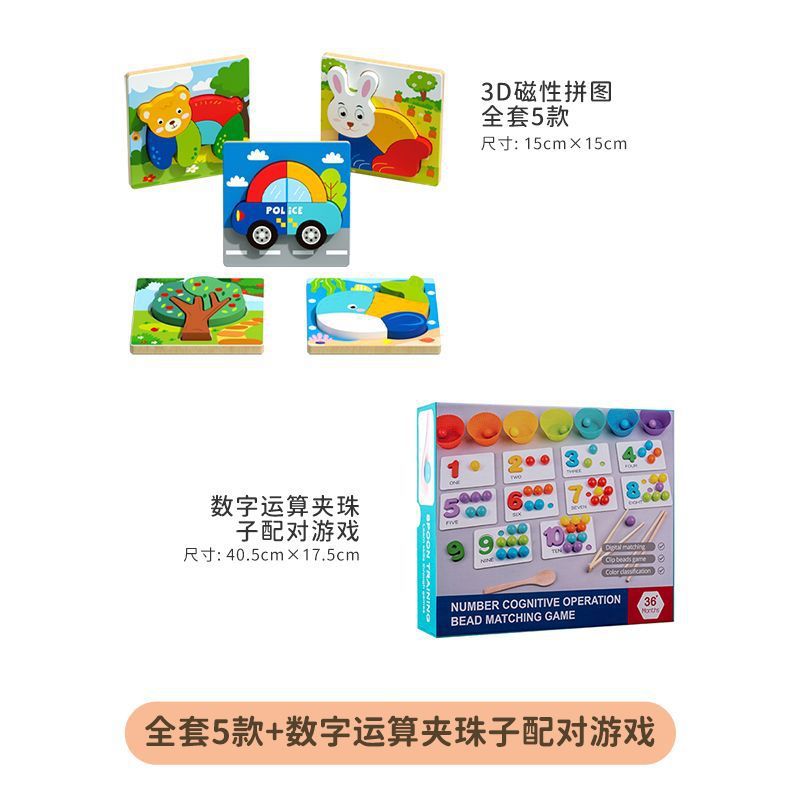
3D wooden magnetic picture-puzzle boards: each pictured animal, tree or vehicle board measures 15 × 15 cm (approximately 5.9 × 5.9 inches). The dimension refers to an individual puzzle board, not the combined footprint of a multi-activity arrangement.
How much space should I allow for a picture puzzle?
Each animal-themed magnetic puzzle board is 15 cm square. Leave additional table space for the removable pieces and any other activity components used during play.
What's special about this learning set?
- Animal picture puzzles: help children notice colors, animal features, edges and how individual pieces combine to form a complete image.
- Magnetic matching play: a hands-on way to explore placement and orientation under adult supervision.
- Shape and geometry activities: use tangram-style pieces to introduce spatial relationships such as above, below, rotate and beside.
- Rainbow stacking: compare sizes and colors while practising controlled grasp-and-place movements.
- Flexible difficulty: begin with two or three pieces, then offer more as interest grows.
Bring picture-building, geometric matching and rainbow stacking into one hands-on learning routine. Children can explore animal pictures, match colors, compare shapes and build simple arrangements using the play pieces featured in the product gallery.
How to use it: four parent-friendly activities
1. Find the matching home
Lay out only two animal pieces and invite your child to look for where each belongs. Model one piece, then give time to explore. Say, “The bear has a yellow face. Where might it fit?”
2. Tell an animal story
Choose one finished puzzle and invent a two-sentence story. Invite the learner to point, name an animal, make a sound or choose what happens next. There is no need for a perfect verbal response.
3. Build a rainbow
Place the stacking pieces from largest to smallest, then try the reverse. Name the colors, compare sizes, or simply enjoy the movement and repetition.
4. Copy a shape
Use a small number of geometric pieces to copy a house, boat or invented design. Ask: “What could we turn?” and praise exploration rather than speed.
Skills children can explore
The activities give children practical opportunities to explore visual matching, spatial vocabulary, hand-eye coordination, observation and shared communication. Start small, repeat favorites and build more elaborate challenges as the learner shows interest.
Caregiver & educator guidance
Introduce one simple action, demonstrate it slowly and invite the learner to try. Keep the number of pieces manageable, follow the learner's interests and return to favorite activities for familiar, enjoyable practice. Use clear language, offer choices and celebrate participation at each stage.
For different learning needs
Use this learning set for flexible, caregiver-led play. Present one activity at a time for learners who prefer structure, or introduce storytelling and extra challenges for those who enjoy variety. Each session creates opportunities to practice attention to a task, fine-motor coordination, communication and independent choices. The product is an educational play resource, not a medical treatment.
Safety & care
Adult supervision is essential. Inspect wooden and magnetic play pieces before each session, keep small or detachable components away from children who mouth objects, and discontinue use if a magnet or other part becomes loose or damaged. Follow the age and safety information provided with the product. Wipe surfaces with a lightly damp cloth and dry fully.
Real-Life Play Scenarios for Parents and Educators
How can I start Montessori-inspired animal puzzle play at home?
Choose one animal picture puzzle, place two or three pieces on a clear table and show one match. Invite the child to complete the picture, name a feature or point to an animal. Keep the experience child-led and return to favorite scenes across several short sessions.
What can my preschooler do with rainbow and geometric play pieces?
Explore color order and size relationships with the rainbow elements, then use geometric pieces to create a simple house or boat shape. Invite the child to change the design and describe what it becomes. Keep separate game components organized between activities.
How can caregivers build storytelling into an animal matching activity?
Once a picture is complete, invite the learner to imagine where the animal lives or what it does next. Accept a spoken answer, gesture, sound or picture choice. For small groups, let each learner contribute one action to the shared story.
Frequently asked questions
Is this toy inspired by Montessori or Waldorf education?
The set combines Montessori-inspired hands-on matching, shape exploration and child-led repetition. Its rainbow and geometric pieces can also be used for Waldorf-inspired imaginative scenes and storytelling. These are play ideas linked to each approach; the product is not a certified Montessori or Waldorf curriculum.
How can I use this toy in a short daily learning session?
Start with a few animal puzzle pieces, celebrate the matching process and introduce the rainbow or geometric elements only when the learner wants a fresh activity.
Is this a Montessori product?
Yes. This Montessori-inspired play set emphasizes hands-on discovery, simple matching, learner-led choices and repeated practice. It is an educational toy rather than a formal Montessori curriculum.
Can a child with autism or ADHD use it?
Yes. Use short, caregiver-guided activities with fewer pieces and simple visual choices. Adapt each activity to the learner's sensory preferences, attention style and safety needs.
Can we use the set in a preschool or learning center?
Yes, as a supervised small-group or individual activity. Inspect pieces before each use and follow the product's age and safety information.
How long should each activity last?
Start with a few enjoyable minutes and follow the learner's cues. Repeating one familiar activity can be more useful than completing every board at once.
What if my child finds the puzzle too challenging?
Reduce the number of pieces, show one example and allow pointing or choosing between options. End on a positive, comfortable note.
Couldn't load pickup availability